
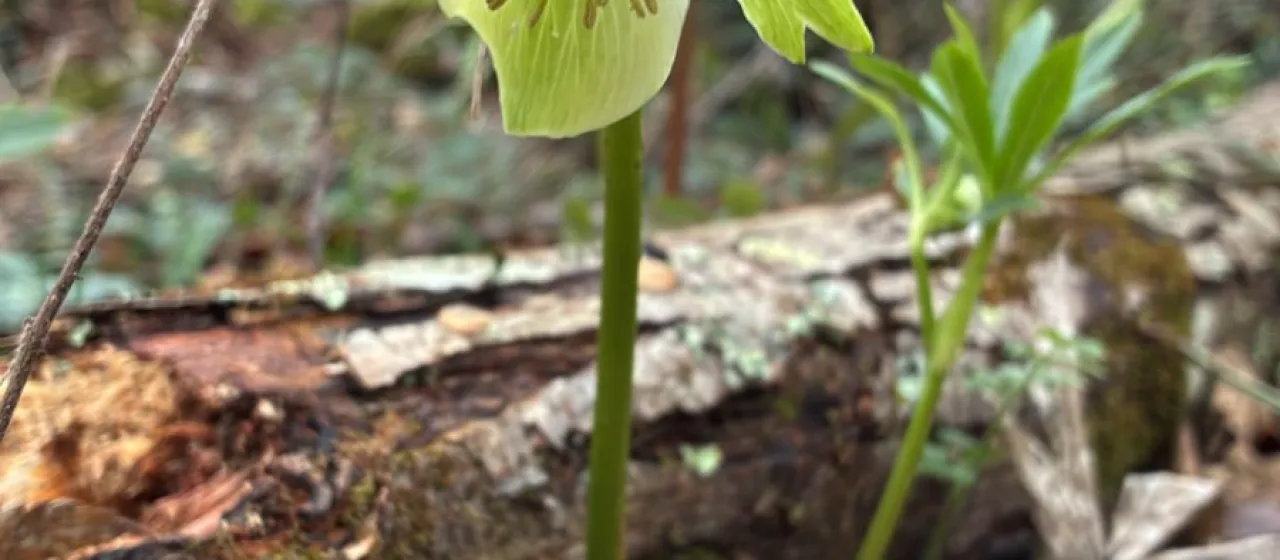
Description
Green hellebore (Helleborus viridis) is a perennial herbaceous plant belonging to the Ranunculaceae family. It is recognized not only for its distinct early-spring blooming period but also for its historical role in traditional medicine. As an agricultural object, it is highly valued in nurseries specializing in shade-tolerant perennial species.
The plant originates from Central and Southern Europe, thriving naturally in woodland habitats. Its cultivation requires sites that mimic these conditions, typically found in temperate climate zones. The species prefers sheltered locations where it is protected from the scorching intensity of summer sun, ensuring stable soil temperatures throughout the vegetation cycle.
Botanically, Helleborus viridis is characterized by basal, palmate leaves and delicate green flowers that appear as early as late winter or early spring. The plant possesses a robust rhizome system that allows it to persist in the soil for many years. Its adaptation to shade makes it an excellent candidate for intercropping in forested areas or specialized horticultural landscapes.
Agronomic requirements for this crop focus on soil composition and moisture management. It thrives in well-drained, alkaline or neutral soils rich in organic matter. Farmers and gardeners should emphasize:
- Adding compost or leaf mold to improve soil structure.
- Ensuring excellent drainage to prevent crown rot.
- Avoiding excessive nitrogen fertilizers that may weaken the plant.
- Applying organic mulch annually.
The economic value of Green hellebore lies primarily in its application as an ornamental crop and a minor resource for pharmacological extraction. Like many members of the Ranunculaceae family, the plant is toxic if ingested, which necessitates caution during handling. Common pests include aphids and slugs, while fungal diseases can be mitigated through proper spacing and moisture control in the plantation area.