
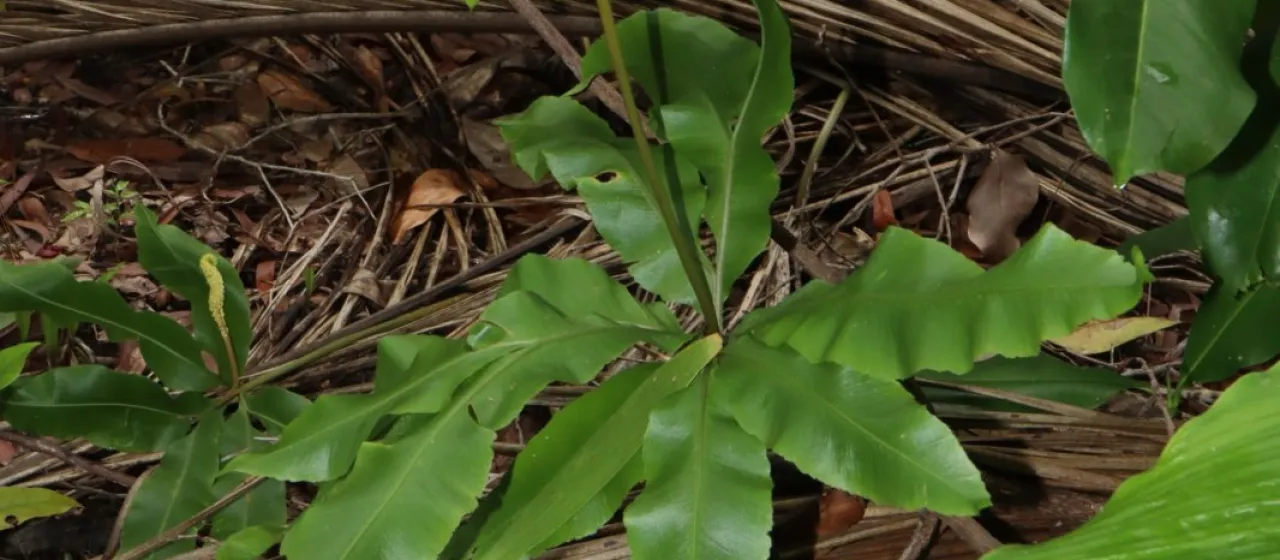
Description
Helminthostachys zeylanica is a distinctive species of fern belonging to the family Ophioglossaceae. Often referred to as the ground fern or medicinal fern, it is a monotypic genus, making it a unique subject of botanical study due to its evolutionary lineage and specific ecological adaptations.
The plant originates from the tropical zones of Southeast Asia and Oceania. Its native habitat includes swampy forests, shaded riverbanks, and areas with high humidity. It has evolved to thrive in environments where shade is prevalent, protecting it from the intensity of direct equatorial sunlight.
Botanically, this fern is characterized by a fleshy rhizome that supports a single leaf structure. This leaf is divided into a sterile photosynthetic portion and a fertile portion known as a sporophore. The sporophore, which looks like a long, cylindrical spike, is the most distinctive feature of the plant's reproductive system.
Cultivation of this species requires a stable environment with high atmospheric humidity and consistently moist, humus-rich soil. Farmers or collectors aiming to propagate it must avoid waterlogging while ensuring the root system does not dry out, as the plant is sensitive to changes in its hydrological environment.
Industrially and traditionally, Helminthostachys zeylanica is primarily recognized for its pharmacological properties. The rhizome is utilized in traditional Asian medicine for treating inflammation, respiratory issues, and various metabolic disorders, thanks to its rich content of secondary metabolites and antioxidant compounds.
- Requires high levels of ambient humidity
- Thrives in humus-rich, acidic to neutral soil
- Shade-loving, unsuitable for open fields
- Slow-growing rhizomatous perennial