
Description
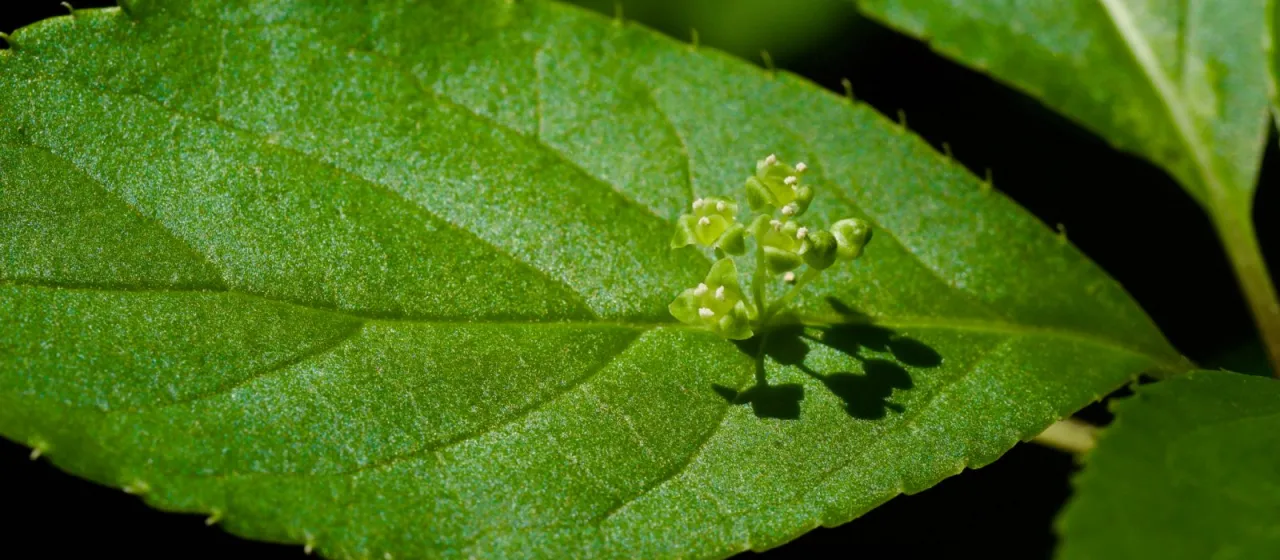
Helwingia japonica is a distinctive shrub belonging to the Helwingiaceae family. It is widely recognized by botanists and enthusiasts for its remarkable habit of bearing flowers and fruits directly from the midrib of its leaves. This evolutionary adaptation, known as epiphyllous flowering, makes the plant a unique addition to botanical gardens and exotic plant collections.
The native range of Helwingia japonica spans across East Asia, including Japan, China, and the Himalayan regions. It typically thrives in the understory of mountain forests, where it receives dappled sunlight and constant air humidity. These natural conditions must be replicated as closely as possible to maintain the plant's health and vigor in a cultivated environment.
The plant features deciduous, lanceolate-ovate leaves with serrated margins. The inflorescences emerge during the spring, presenting small, greenish-white flowers on the leaves, which later develop into small, black, drupe-like berries. The stems are generally slender and woody, giving the shrub an elegant and airy growth habit that reaches a moderate height of about 1.5 to 2 meters.
Successful cultivation requires a location with partial to full shade and rich, humus-dense soil that is well-drained. Helwingia japonica is sensitive to dry air and direct intense sun, which can cause leaf scorch. Regular watering is essential, especially during the active growing season, and the soil should remain moist but never waterlogged to prevent root rot.
The primary uses and significance of this plant include:
- Ornamental landscaping for shaded woodland garden displays.
- Culinary use in local Asian traditions, where young leaves are gathered and prepared as a wild vegetable.
- Botanical research due to its unique reproductive structures that deviate from standard plant biology.
Common health issues for Helwingia japonica include susceptibility to powdery mildew in high-humidity, low-airflow environments. Growers should also be vigilant against common pests such as aphids and spider mites, which can be managed through cultural practices like adequate spacing and maintaining optimal humidity. Proper mulching can also protect the root system from temperature fluctuations.