
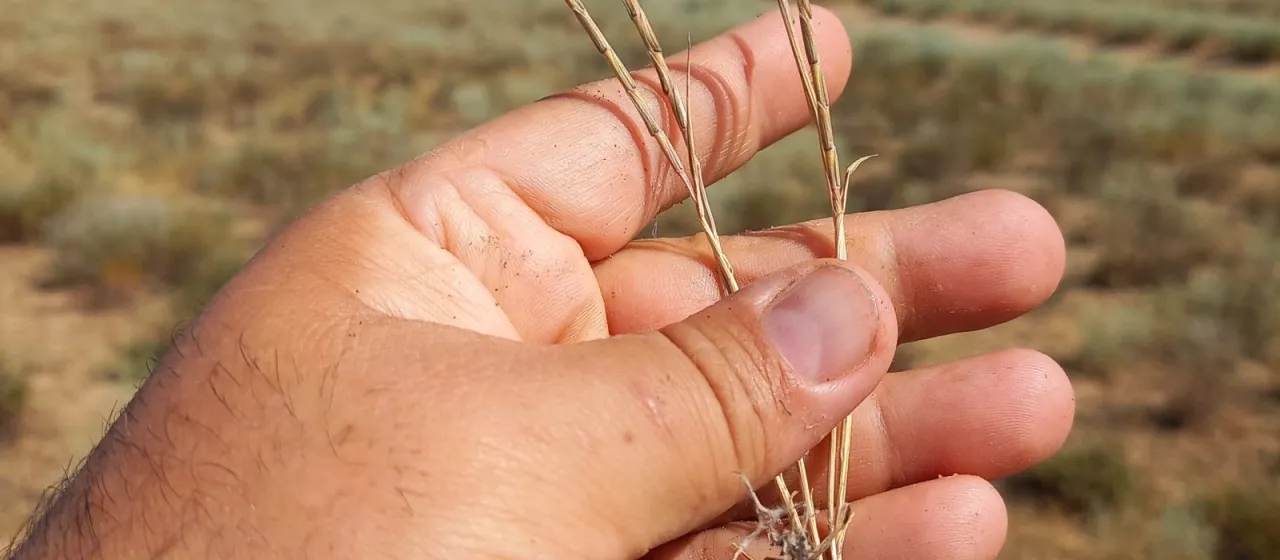
Description
Henrardia persica is an annual grass species belonging to the Poaceae family. As a niche plant within the grass group, it plays a vital role in its native arid ecosystems, serving as a primary producer in environments where more demanding crops would fail to survive. It is recognized for its ability to complete its life cycle during the brief moisture-rich periods typical of desert and steppe climates.
The plant originates from the Middle East and regions of Central and Western Asia, including Iran, Iraq, and parts of the Caucasus. Its natural habitat consists of rocky slopes, semi-desert plains, and arid shrublands. This distribution indicates a species that is highly adapted to extreme temperature fluctuations, high solar radiation, and limited seasonal rainfall, thriving in areas with low soil fertility.
Botanically, Henrardia persica is characterized by slender, erect culms that typically reach modest heights. The inflorescence is a delicate, spike-like structure. Its leaves are thin and often possess structural adaptations to minimize transpiration, such as a waxy cuticle or fine hairs. The root system is relatively shallow but highly efficient at extracting moisture from the topsoil immediately after precipitation events.
Regarding cultivation requirements, this grass favors well-drained, porous soils, particularly those that are sandy or rocky. It does not tolerate waterlogging, as its physiology is geared towards oxygen-rich, dry substrates. In terms of agronomy, it is rarely cultivated as a main crop; instead, it is managed as part of native range improvements where its drought resistance helps stabilize the soil and provides early-season biomass.
The primary agricultural utility of Henrardia persica is as a source of forage for livestock, particularly sheep and goats, during the early spring. While not a commercial staple, its genetic traits are of significant interest to researchers seeking to develop drought-tolerant cereal varieties. Potential pests and diseases are generally limited by the plant's short lifecycle and harsh environment, though local rust fungi can occasionally affect stands during humid years.
- Exceptional drought resistance.
- Rapid biomass accumulation in spring.
- Genetic resilience to abiotic stressors.
- Stabilization of arid rangelands.