
Description
Common hepatica (Hepatica nobilis) is a perennial herb belonging to the Ranunculaceae family. Renowned for its early spring blooms, it is a staple of shade gardens and woodland landscapes. The plant's name derives from its trifoliate leaves, which were historically thought to resemble the shape of the human liver.
Native to forests across Europe and parts of Asia, the plant thrives in cool, shaded environments. In a cultivation context, it prefers deciduous woodland settings where it can benefit from dappled sunlight and leaf litter. Its ability to thrive in low-light conditions makes it a valuable asset for challenging areas of the landscape that remain shaded throughout the day.
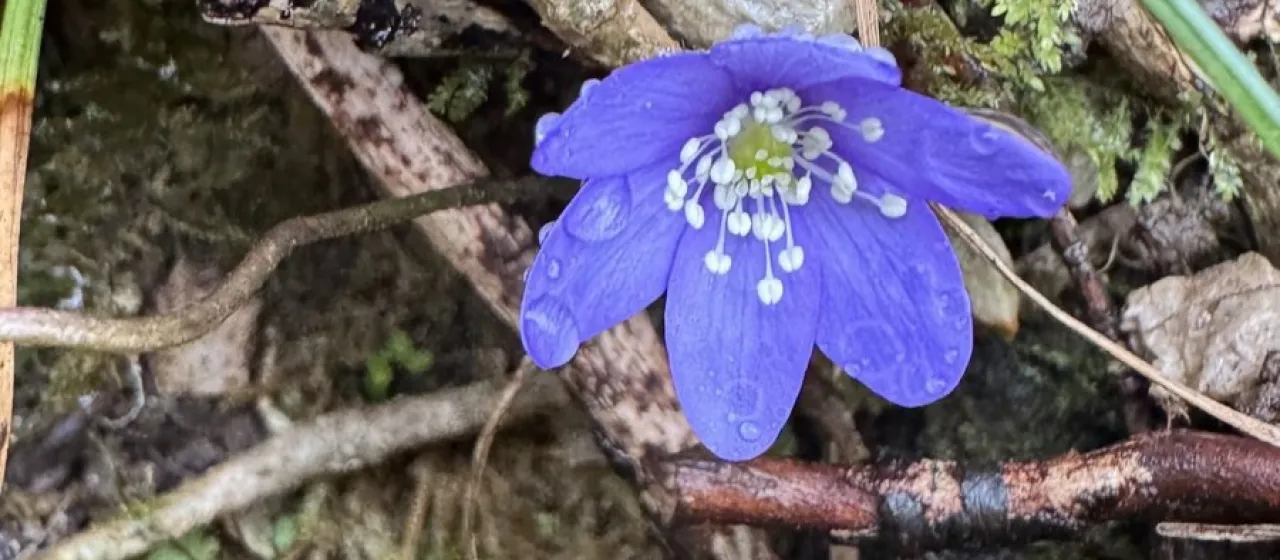
Botanically, the plant features a compact habit with evergreen, leathery leaves that persist through the winter. The flowers, appearing in early spring, range from deep blues to purples, pinks, and whites. These blossoms are highly sensitive to light and temperature, closing during cloudy weather or at night to protect their delicate internal structures.
For successful cultivation, soil should be rich, moisture-retentive, and slightly alkaline to neutral. Adding organic mulch, such as leaf mold, helps mimic the forest floor conditions required for optimal growth. Good drainage is essential, as the roots are susceptible to rot if they sit in standing water for prolonged periods during the dormant season.
In landscape management, Common hepatica is primarily used as an ornamental species for rock gardens and woodland borders. It is not typically grown as a commercial crop for consumption or pharmacology due to its mild toxicity and slow growth rate. Its value lies in its aesthetic contribution to early-season garden displays and its ecological hardiness.
- Thrives in shade to partial shade conditions.
- Requires minimal pruning; old leaves can be removed after new growth starts.
- Propagated by division after flowering or via fresh seeds.
- Susceptible to slug and snail infestations during wet springs.
- Avoid over-fertilizing with high-nitrogen commercial products.