
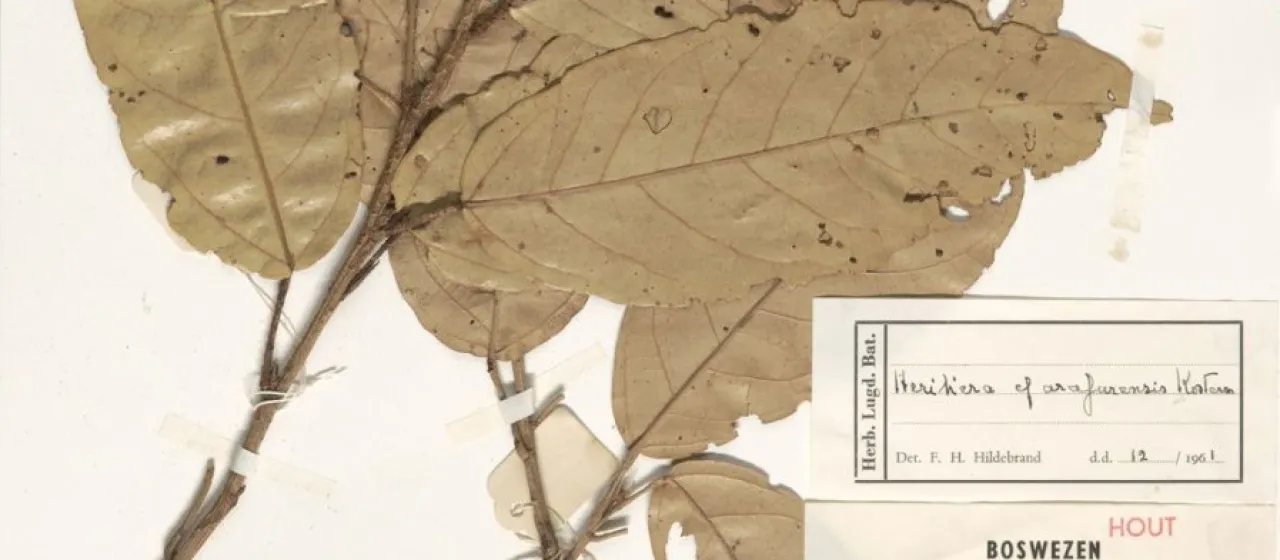
Description
Heritiera arafurensis is a significant tropical tree species belonging to the Malvaceae family. Historically associated with the Sterculiaceae group, it is now taxonomically placed within the diverse Malvaceae order. This species is recognized for its stature and ecological importance in its native forest habitats.
The natural distribution of Heritiera arafurensis is primarily centered around the Arafura Sea region, encompassing parts of Northern Australia and specific islands within the Indonesian archipelago. The species thrives in tropical climates characterized by high temperatures and consistent humidity, typically inhabiting coastal and lowland rainforest environments.
Botanically, the tree is noted for its robust trunk structure and dense wood. The leaves exhibit a characteristic appearance, often featuring an abaxial silver coating that serves as an adaptation to prevent water loss. The plant utilizes insect-based pollination, with small, structured inflorescences that produce seeds adapted for dispersal in tropical environments.
Cultivation requirements for this species include deep, nutrient-rich soils with excellent drainage capabilities to prevent root issues. The climate must remain stable, avoiding frost or extreme temperature fluctuations. In forestry applications, careful site selection and the maintenance of humidity levels are critical for optimal tree development during early growth stages.
The primary utility of Heritiera arafurensis lies in its high-quality timber, which is valued for its strength, durability, and aesthetic appeal in furniture making and structural woodwork. Key pests and diseases include wood-boring insects and root rot pathogens, particularly in instances where environmental conditions deviate from the ideal, such as excessive soil water stagnation.