
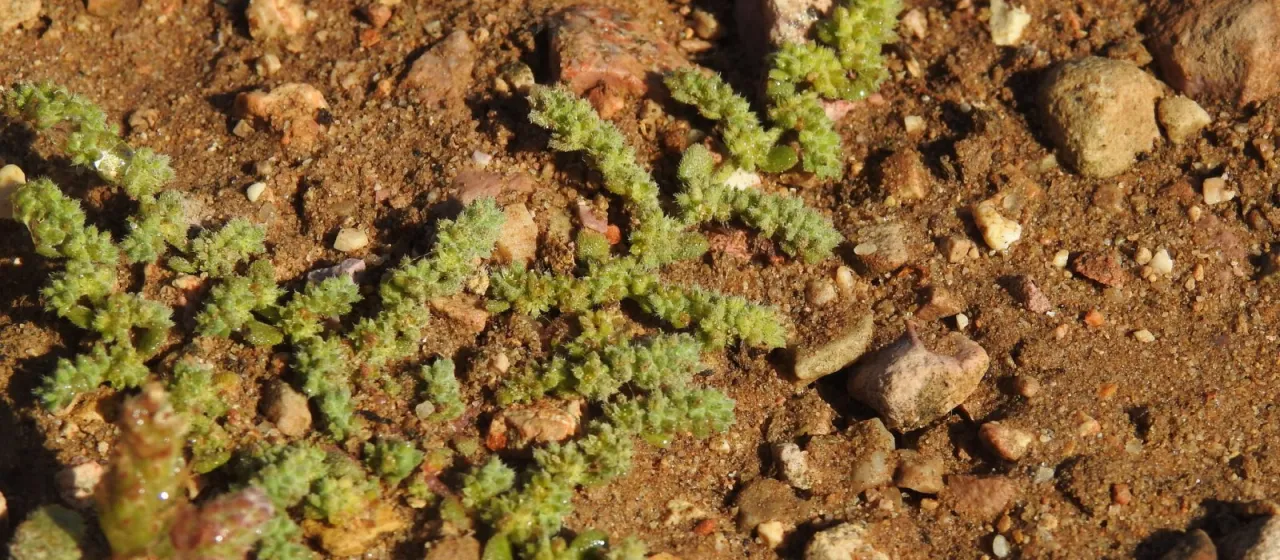
Description
Algarvian rupturewort (Herniaria algarvica) is a perennial herbaceous plant belonging to the Caryophyllaceae family. While not a conventional staple crop, it is gaining interest in niche agriculture as a ground cover plant and a botanical resource. It is highly valued for its creeping habit and adaptability to rocky, arid landscapes where traditional crops struggle to thrive.
The species is native to the Iberian Peninsula, specifically the Algarve region, where it has evolved to survive in Mediterranean climates with hot, dry summers. Its natural distribution is characterized by sandy, well-draining soils. Farmers interested in marginal land utilization often look to such species for soil stabilization and landscape restoration projects in semi-arid zones.
Botanically, the plant features a mat-forming growth pattern with prostrate stems that spread radially from the center. The leaves are small, often semi-succulent, and covered with fine hairs, which serves as an adaptation to minimize water loss through transpiration. The flowers are minuscule, greenish, and clustered in the leaf axils, lacking showy petals but serving as a biological marker for the species.
Regarding cultivation requirements, Herniaria algarvica thrives in full sun exposure and requires minimal soil amendments. It does not tolerate waterlogging, as the root system is prone to fungal decay in stagnant conditions. The standard agrotechnical approach involves:
- Site selection with high permeability (sandy or stony soil);
- Direct seeding or plug planting in spring;
- Minimal irrigation focused on the establishment phase only;
- Periodic removal of invasive weeds to prevent resource competition.
The economic value of this crop lies in its potential for pharmaceutical applications, as members of the genus Herniaria are known for containing bioactive compounds such as saponins and flavonoids. Common challenges in managing this crop include protection against spider mites and fungal pathogens like powdery mildew, particularly when humidity levels remain high for extended periods, necessitating strict control of environmental moisture.