
Description
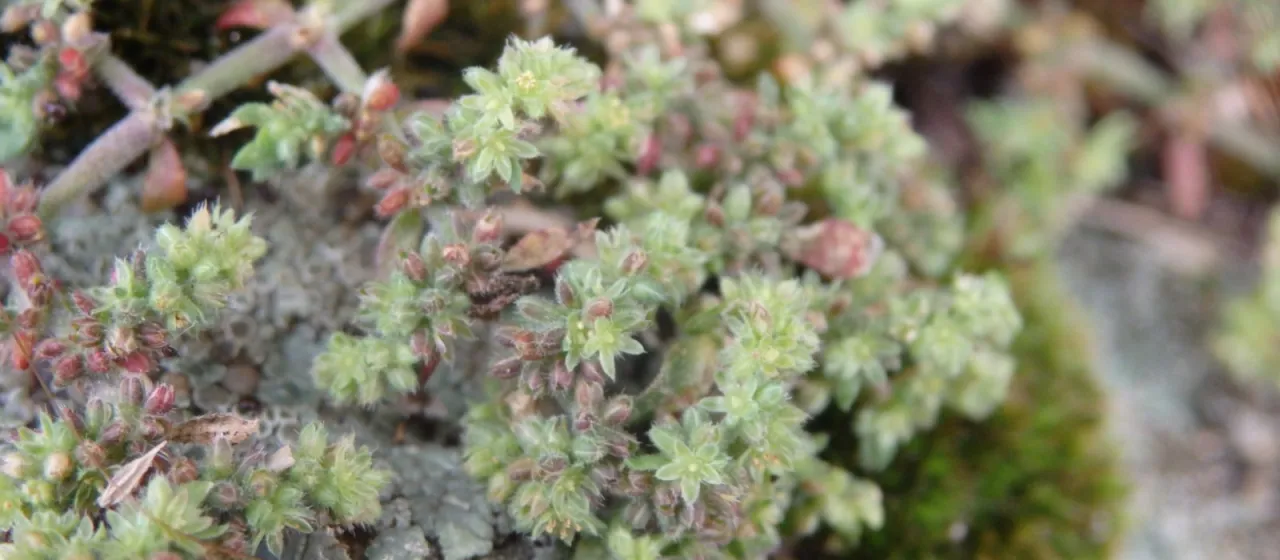
Herniaria lusitanica is a perennial herbaceous plant belonging to the Caryophyllaceae family. In agricultural and horticultural practices, this species is highly regarded as a robust ground cover that thrives in challenging environments where other crops might fail to establish.
The plant originates from the Iberian Peninsula, specifically native to regions of Portugal and Spain. Its natural habitat consists of rocky, well-drained terrain, which has defined its physiological adaptation to arid climates. It is increasingly utilized in landscaping and restoration projects across Europe for its resilience and low-maintenance nature.
Botanically, it is characterized by its prostrate, creeping growth habit, forming dense mats that hug the ground. The leaves are small, often glabrous or pubescent, and opposite. The flowers are minuscule, greenish-yellow, and clustered in the leaf axils. It features a deep taproot that provides excellent stability and drought resistance.
Cultivation requirements favor well-draining, sandy or gravelly soils with a neutral pH. The plant requires significant sunlight to maintain its dense structure and vitality. Key agricultural practices include minimal irrigation once established and avoiding nitrogen-heavy fertilizers, which can induce leggy growth and reduce the plant's natural hardiness.
The economic value of this plant is found in both phytotherapy and soil conservation. In traditional medicine, it is used for its diuretic properties. In agriculture, it serves as an excellent erosion control agent on steep banks and sandy areas. Common plant protection challenges include root rot caused by poor soil drainage and susceptibility to aphid infestations during early spring growth.