
Description
Herniaria polygama, belonging to the Caryophyllaceae family, is a perennial herb valued for its specific medicinal properties and ground-covering capabilities. Often referred to as a rupturewort species, it exhibits a low-growing, mat-forming habit that makes it physically distinct from other forage crops. In professional agriculture, it is cultivated primarily as a high-quality botanical raw material for the pharmaceutical industry.
Native to Eastern Europe, the Caucasus, and parts of Western Siberia, this species is naturally adapted to dry, sandy, and nutrient-poor environments. Its extensive distribution reflects its resilience to variable climates, ranging from semi-arid steppes to temperate regions. It thrives in open, sun-drenched locations where competition from taller vegetation is minimal.
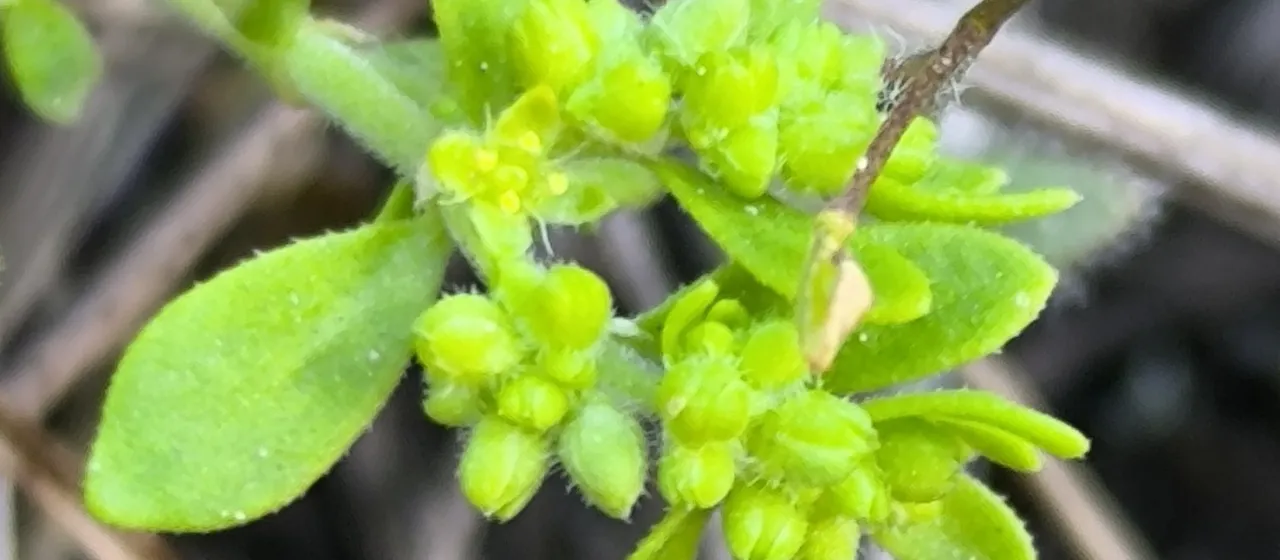
Botanically, the plant is characterized by small, opposite leaves and dense clusters of greenish flowers positioned at the leaf nodes. Its taproot system is remarkably robust, allowing the plant to anchor itself in shifting sandy soils and access moisture from deeper strata during summer droughts. The branching stems spread horizontally, creating a dense vegetative layer that protects the soil surface.
Successful cultivation requires soil with excellent drainage, such as sandy or loamy-sandy substrates. It is essential to avoid heavy, clay-rich soils that may cause waterlogging and root hypoxia. Agronomic management focuses on weed control in the early growth stages, as the plant is relatively slow to establish its ground cover. Minimal fertilization is generally sufficient, provided the soil remains neutral to slightly alkaline.
The primary economic use is the harvesting of aerial biomass for medicinal applications, particularly for its diuretic and anti-inflammatory compounds. In land management, it is utilized as a biological stabilizer for sandy slopes prone to erosion. The plant is relatively resistant to pests, though root rot pathogens present a significant risk if irrigation is poorly managed during periods of high humidity or low soil aeration.