
Description
Herrania purpurea is a fascinating evergreen tropical plant belonging to the Malvaceae family. Frequently identified as a close relative of the commercially important Theobroma cacao, this species is often referred to in botanical literature as monkey cacao or wild cacao. The plant typically grows as a small, understory tree, characterized by a slender trunk and large, impressive leaves that thrive in the deep shade of tropical rainforests.
The plant originates from the rainforests of South and Central America, particularly within the Amazon basin. Its natural habitat is defined by consistent high humidity, stable temperatures, and rich, moist soil. Due to these evolutionary adaptations, Herrania purpurea is strictly a tropical crop, incapable of surviving in temperate regions or climates with distinct, cold winters.
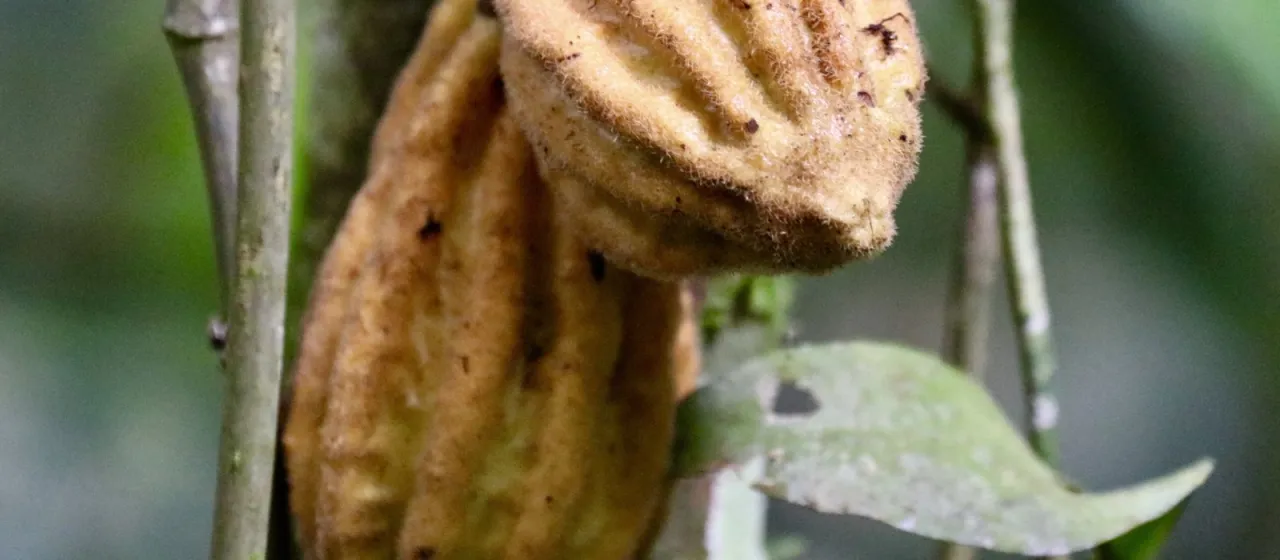
From a botanical standpoint, the species is renowned for its cauliflory, a phenomenon where flowers and fruits emerge directly from the trunk rather than from branches. The fruits are elongated, ribbed pods that resemble smaller versions of cacao pods. These pods develop a distinct purplish hue when mature, which distinguishes them from related species and provides the specific epithet purpurea.
Cultivation of this species requires meticulous attention to environmental conditions. It demands well-draining, humus-rich soil and a location sheltered from direct, intense sunlight, which mimics its natural forest floor environment. Consistent moisture levels are crucial for healthy development, though waterlogging must be avoided to prevent root rot. Regular monitoring of air humidity is essential for successful growth in greenhouse settings.
- Requires temperatures between +22°C and +28°C.
- Sensitive to frost and cold drafts.
- Prefers organic-rich, slightly acidic soil.
- Benefits from regular, light organic mulching.
In terms of economic use, the seeds of Herrania purpurea are processed similarly to cacao to produce beverages. While not a major global commodity, it remains important in local traditional systems. Regarding pests and diseases, the plant is susceptible to various fungal pathogens that thrive in high humidity, as well as sap-sucking insects that target the soft tissue of the leaves and developing fruit pods.