
Description
Tanglehead (Heteropogon contortus) is a perennial grass species belonging to the Poaceae family. Recognized for its remarkable resilience, it serves as a critical forage plant in tropical and subtropical climates, providing sustainable grazing opportunities where more sensitive agricultural crops often fail.
The species originates from the tropical regions of Africa, Asia, and Australia but has successfully naturalized across various global landscapes. It is widely distributed in areas characterized by seasonal drought, playing a vital role in maintaining ecological balance and agricultural productivity in arid zones.
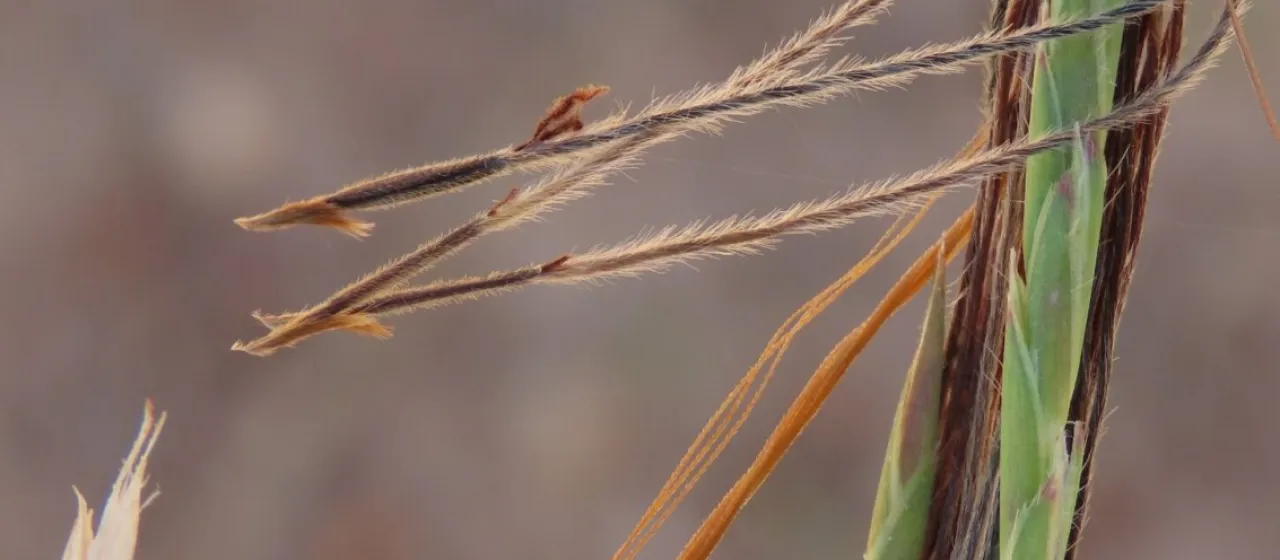
Botanically, the plant is characterized by tufted growth and distinctive flowering spikes. Its most notable feature is the presence of long, twisted awns on the spikelets. These awns exhibit hygroscopic properties, allowing them to twist and drill the seed into the soil surface, which is a highly effective survival mechanism in dry environments.
Tanglehead is well-suited for diverse soil types, including sandy, rocky, and low-nutrient substrates. It thrives in full sunlight and exhibits exceptional drought tolerance. However, it requires well-draining soil and does not perform well in waterlogged conditions or areas with prolonged, dense canopy shade.
In agricultural practice, it is primarily used for livestock grazing. It offers high nutritional value during early growth stages. Producers must manage grazing pressure carefully; once the plant reaches maturity, the hardened, twisted awns can become a nuisance, potentially causing mouth and eye injuries to grazing livestock.
- Highly drought-resistant forage grass.
- Effective at stabilizing soil and preventing erosion.
- Low-input maintenance requirements.
- Suitable for sustainable pasture restoration.
The plant is susceptible to common grass pathogens such as rusts and smuts, especially when humidity levels rise unexpectedly. Pest management involves maintaining proper grazing rotations to ensure the plant remains in a vegetative state, thereby reducing the attractiveness of the stand to secondary pests and pathogens.