
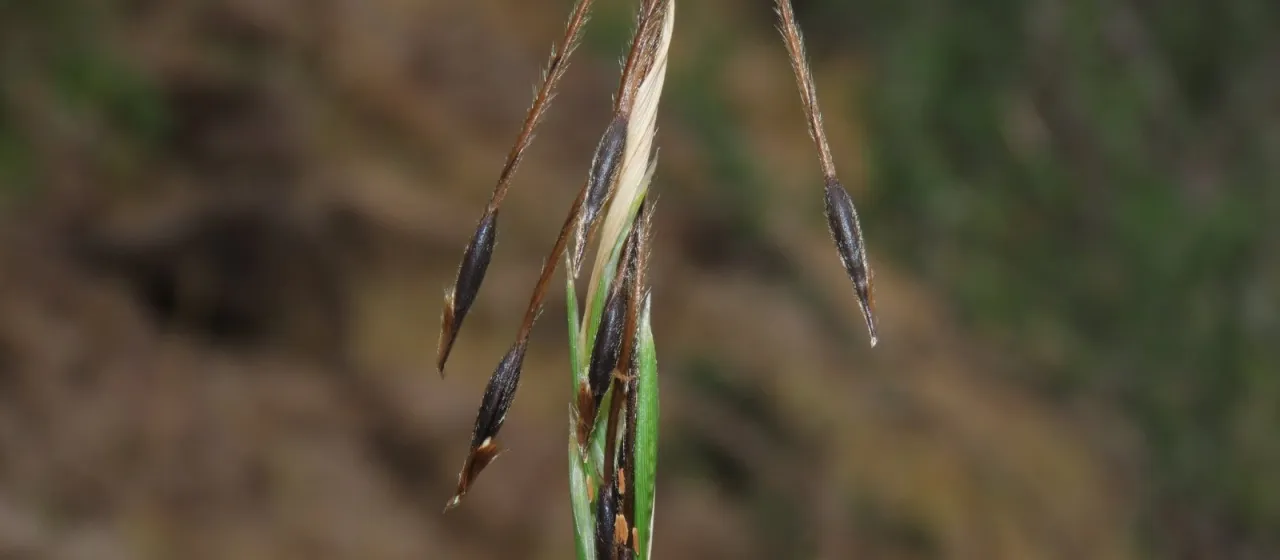
Description
Black spear grass (Heteropogon melanocarpus) is a prominent grass species belonging to the Poaceae family. Known for its adaptability, this grass is a significant component of tropical and subtropical grasslands, playing a vital role in local ecosystems and potential pasture management systems.
The species originated in tropical regions of Africa, Asia, and Australia. It is naturally found in diverse environments, ranging from open savannahs to disturbed sites. Its wide geographical distribution highlights its evolutionary success in occupying various niches under varying moisture levels and temperature regimes.
Botanically, it is a robust, erect grass that can grow up to 2 meters in height. A defining characteristic is its dense, dark-colored spikes that emerge during the reproductive phase. The root system is deep and fibrous, allowing the plant to sustain itself during seasonal dry spells and contribute to the structural integrity of the soil surface.
Regarding agricultural requirements, this crop thrives in well-drained soils, including sandy loams and neutral to slightly acidic soils. It is highly dependent on full sunlight for optimal growth. Farmers focusing on this species must ensure that soil preparation provides adequate aeration to support the initial establishment phase of the plant.
Its primary agricultural utility is concentrated in the following areas:
- Grazing livestock in semi-arid and tropical agricultural zones.
- Soil conservation practices to prevent degradation on slopes and eroded areas.
- Biomass production for forage, provided harvesting occurs before the stems become overly lignified.
- Environmental restoration projects aimed at reclaiming degraded rangelands.
Typical health issues for this crop include occasional fungal infections like rust and attacks from sap-sucking insects. To maintain healthy stands, it is essential to implement rotational grazing strategies. This prevents overgrazing, minimizes pest outbreaks, and ensures that the grass remains in a nutritionally viable state for grazing livestock.