
Description
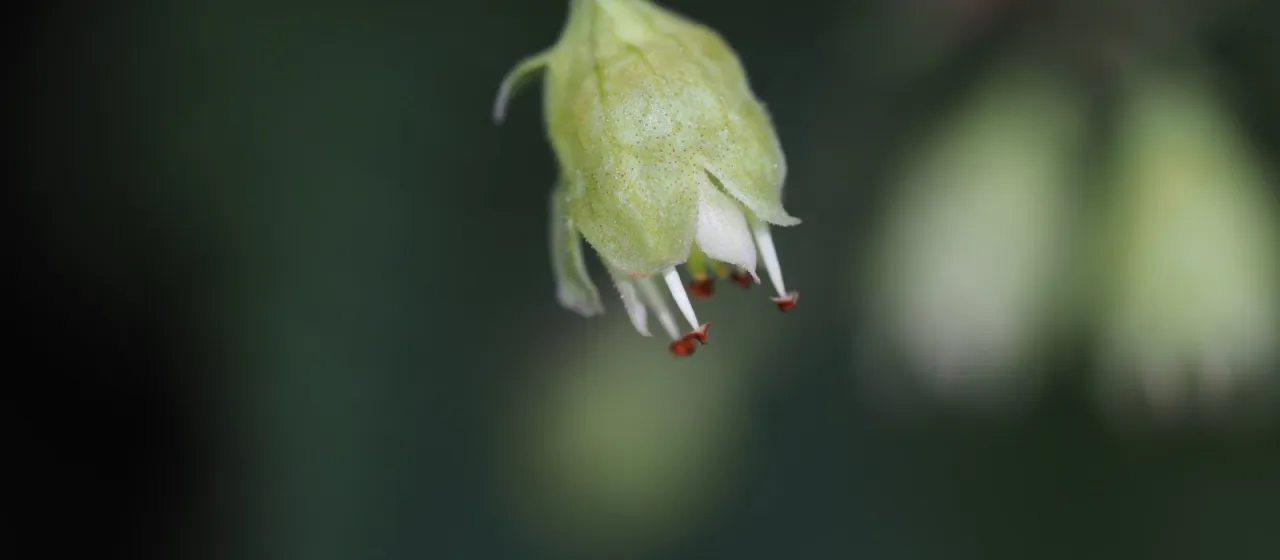
White Heuchera (lat. Heuchera alba) is a perennial herb belonging to the Saxifragaceae family. It is a distinctive species within the genus, renowned for its delicate, white, bell-shaped flowers that bloom on tall, slender stalks rising above a compact rosette of basal foliage.
The native habitat of Heuchera alba includes the mountainous and rocky areas of the eastern United States. Due to its natural adaptation to woodland edges and rocky slopes, it has become a popular subject for ornamental horticulture, particularly in regions with temperate climates where it can thrive in sheltered garden spots.
Botanically, the plant features a dense, clump-forming habit with lobed, leathery leaves. The plant grows from a woody crown that tends to elevate over time, necessitating occasional division and mounding. The white inflorescences appear in late spring to early summer, offering a clean, airy look that contrasts well with darker forest-floor vegetation.
Cultivation requirements focus on providing well-drained, humus-rich soil and partial shade. While it is more shade-tolerant than many other plants, it needs sufficient light to produce its signature white blooms. Irrigation must be consistent to prevent the shallow root system from drying out, especially during peak summer temperatures.
- Consistent moisture management to avoid soil compaction.
- Deadheading spent flowers to maintain a clean appearance.
- Application of organic mulch to regulate soil temperature.
- Dividing clumps every 3 to 4 years to prevent overcrowding.
- Routine checks for pests like black vine weevils.
In landscaping, this species is primarily used for its aesthetic value in rock gardens, borders, and naturalistic woodland planting schemes. While generally hardy, the plant is susceptible to crown rot if drainage is insufficient and can be targeted by nematodes or foliar pathogens, which are best managed through good sanitation and proper spacing.