
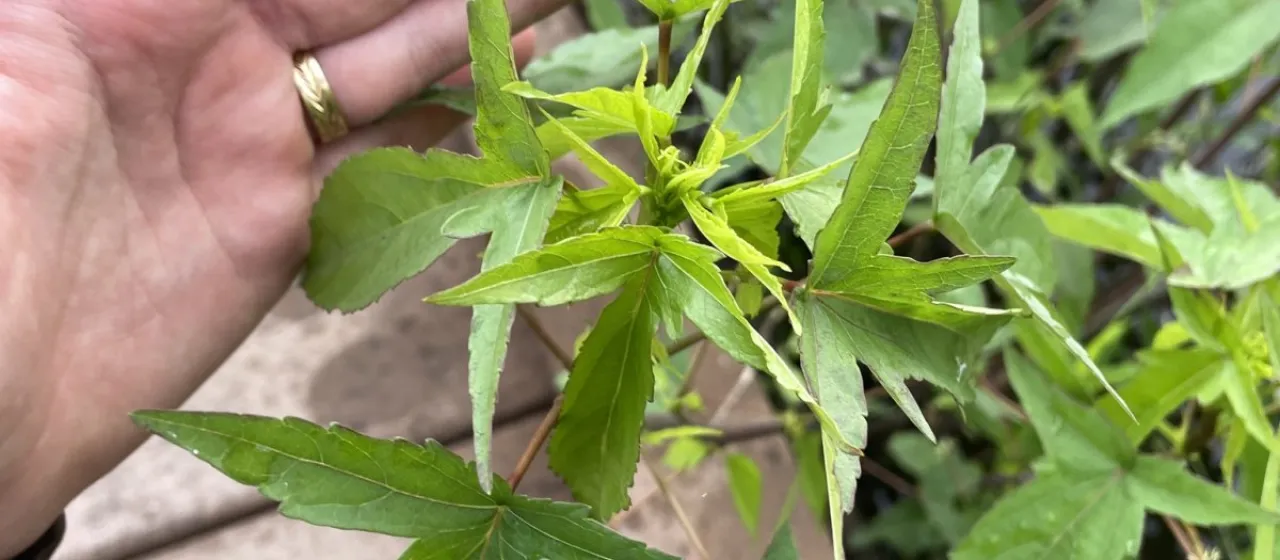
Description
Hibiscus militaris, commonly known as the halberd-leaf rose mallow, is a perennial herbaceous plant belonging to the Malvaceae family. This species is highly valued in botanical circles for its architectural presence and ability to thrive in aquatic or semi-aquatic environments, distinguishing it from more common upland hibiscus varieties.
Originating from the North American wetlands, the plant naturally grows in marshes, riverbanks, and swamps. Its range extends across the eastern and central United States, where it thrives in conditions characterized by saturated soils and high humidity. These natural adaptations dictate its requirements when grown as an agricultural or landscaping crop.
Botanically, the plant is characterized by its distinct, hastate (halberd-shaped) leaves and upright stems. The flowers are the primary aesthetic feature, displaying large, cup-shaped petals ranging from white to deep pink, typically accented with a deep crimson or dark purple eye. The blooming period is relatively long, often extending from mid-summer through early autumn.
For successful cultivation, Hibiscus militaris requires full sun exposure and consistently moist, rich, loamy soil. It is a heavy feeder that benefits from regular organic matter incorporation. Agricultural management focuses on water maintenance: the plant cannot tolerate long periods of drought, which will lead to leaf wilting and stunted flower production.
Management of pests and diseases is a critical component of successful husbandry. Common threats include:
- Aphids and spider mites, particularly in hot, dry conditions.
- Fungal diseases like leaf spot and rust, which occur in poorly ventilated areas.
- Japanese beetles that feed on the foliage and flower buds.