
Description
Climbing Dahlia (Hidalgoa ternata) is a perennial climbing plant belonging to the Asteraceae family. Often referred to as the Mexican climbing dahlia, it is highly prized for its resemblance to the common dahlia, combined with a vigorous, vine-like growth habit that makes it unique among ornamental climbers.
Native to the mountainous regions of Mexico and parts of Central America, this plant thrives in subtropical conditions. While it is a perennial in its native range, in cooler temperate climates, it is typically treated as an annual or a greenhouse plant, as it cannot withstand frost and requires warm, stable temperatures to bloom effectively.
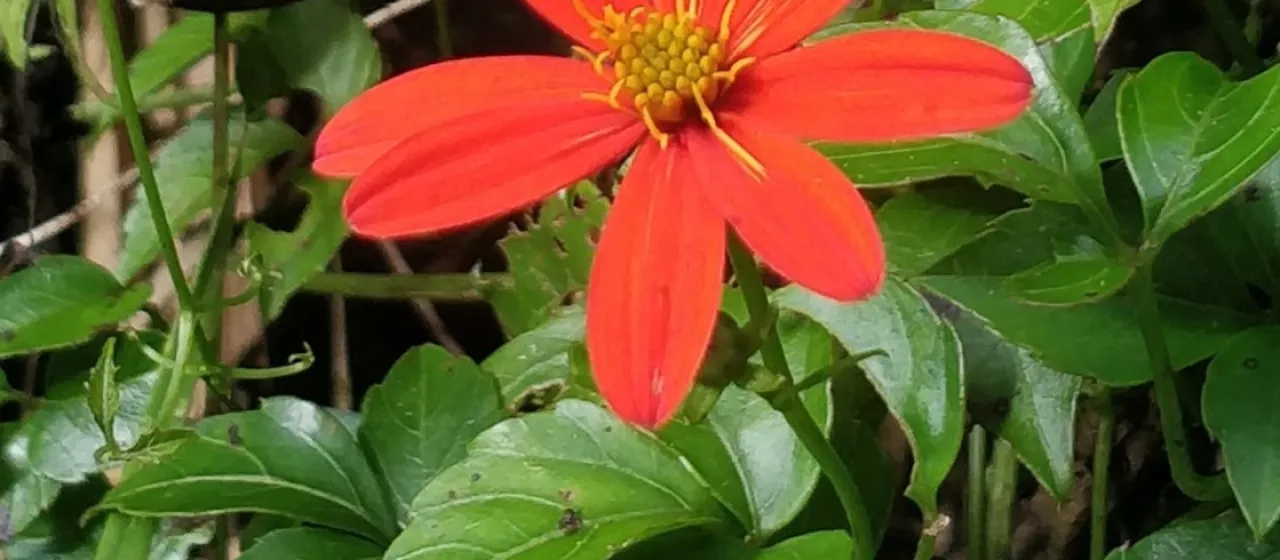
The botanical characteristics of Hidalgoa ternata include delicate, compound, ternate leaves and long, flexible stems that act as vines. The flowers are daisy-like, featuring vibrant orange-red ray florets and a prominent yellow center, adding a splash of intense color to vertical spaces from mid-summer until the first frost.
Cultivation requires a well-drained, nutrient-rich soil substrate and a location that receives bright, filtered light. While it loves warmth, it performs best when protected from harsh midday sun. Regular watering is essential to maintain steady growth; however, over-saturation of the soil should be strictly avoided to prevent root rot issues.
In landscaping, this climber is ideal for trellis work, pergolas, and decorative containers where it can scramble vertically. Common threats include aphids and spider mites, which can be managed with organic insecticidal soaps. Maintaining good airflow around the foliage is key to preventing fungal issues like powdery mildew in humid environments.