
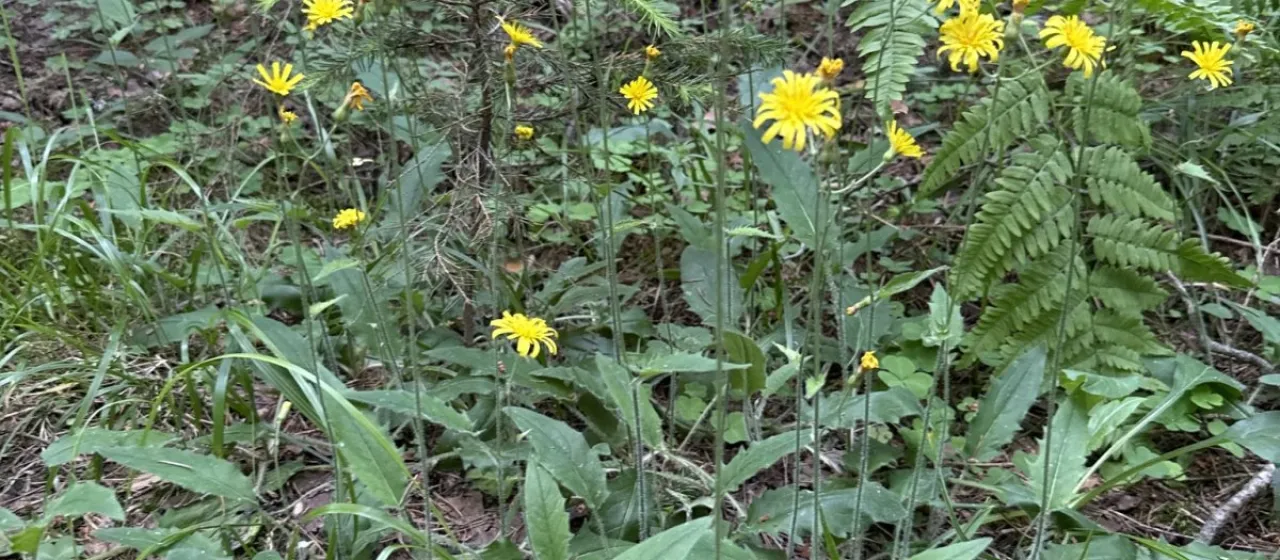
Description
Wood hawkweed (lat. Hieracium sylvularum) is a perennial herbaceous plant belonging to the Asteraceae family. In agronomic contexts, it is recognized as a hardy species capable of establishing itself in diverse forest and meadow environments, contributing significantly to the stability of semi-natural grasslands.
The origin and primary range of this species are centered in the temperate zones of Europe. It is a shade-tolerant plant, typically found in woodland margins, clearings, and open forest patches. Its ability to adapt to varying light conditions makes it a valuable component in ecological restoration projects and sustainable pasture management.
Botanically, the plant is characterized by a persistent root system and a basal rosette of leaves. The erect stems develop mid-summer, terminating in distinctive yellow flower heads typical of the Hieracium genus. The leaves are generally pubescent, an adaptation that allows the plant to manage water loss effectively in changing forest microclimates.
Regarding cultivation and soil requirements, wood hawkweed thrives in well-drained, slightly loamy soils rich in organic matter. While it is not a high-intensity commercial crop, its management requires minimal intervention: it prefers moderate moisture levels and does not require complex fertilization schedules, making it ideal for low-input agriculture systems.
The primary agricultural use of wood hawkweed is for soil stabilization and as a component of mixed-species forage stands. Typical pests and diseases include minor fungal leaf spots or aphid infestations, which rarely require chemical control under balanced ecosystem conditions. Proper stand management involves preventing overgrazing to ensure the plant's long-term persistence.