
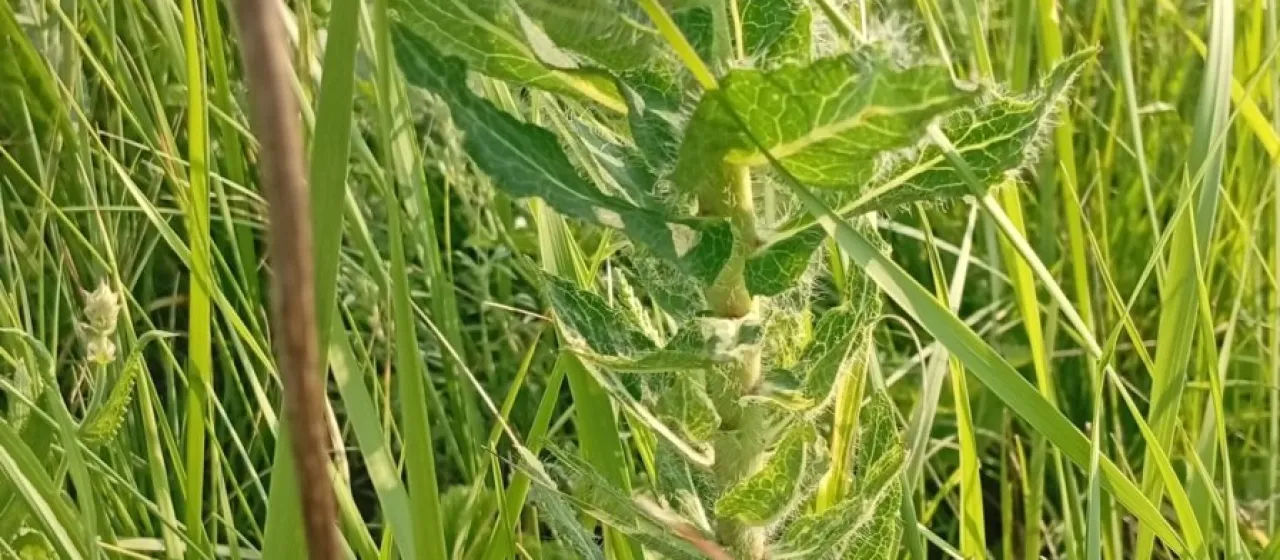
Description
Poisonous hawkweed (Latin: Hieracium virosum) is a perennial herbaceous plant belonging to the Asteraceae family. While its common name suggests toxicity, in agricultural and botanical contexts, it is studied for its unique developmental cycle and its role within meadow and forest-steppe ecosystems, where it functions as a robust perennial species.
The plant originates from the moderate climatic zones of Europe and Western Siberia. Its natural habitat includes sunny hillsides, dry meadows, and forest edges where the soil is well-drained. It has evolved to thrive in soils that are relatively poor in organic matter, provided they receive sufficient solar radiation throughout the growing season.
Botanically, Hieracium virosum is characterized by an erect stem that can reach significant heights, often covered in glandular hairs. The leaves are typically lanceolate and serrated along the margins. The inflorescences consist of bright yellow flower heads that bloom mid-summer, providing a consistent source of nectar for local pollinators.
In terms of agricultural requirements, this crop favors neutral to slightly acidic, loose, and aerated soils. It is notably drought-tolerant once established, making it suitable for regions with limited rainfall. Maintenance involves minimal intervention, primarily focusing on weed management during the establishment phase and ensuring adequate space for air circulation to prevent foliage diseases.
Practical and agricultural aspects of handling this plant require careful observation of its growth patterns and environmental interactions:
- Low susceptibility to common root rots due to its preference for dry soils.
- Potential for naturalized growth, which requires strategic field management.
- Susceptibility to aphids during the budding stage, requiring periodic inspection.
- High resilience to cold temperatures, allowing for reliable overwintering.