Turkish wartycabbage
Bunias orientalis L.
Description
Turkish wartycabbage (Bunias orientalis L.) is a perennial herbaceous plant belonging to the Brassicaceae family. Recognized for its high nutritional value and early spring growth, this species serves as a valuable forage resource for livestock, providing high-quality green biomass when other perennial fodder crops are still dormant.
Originating from Eastern Europe and Western Asia, this plant has adapted to various temperate climates. It is highly valued for its robust survival strategy, including extreme frost tolerance and the ability to thrive in diverse soil conditions, making it a reliable choice for farmers looking to diversify their forage base in challenging environments.
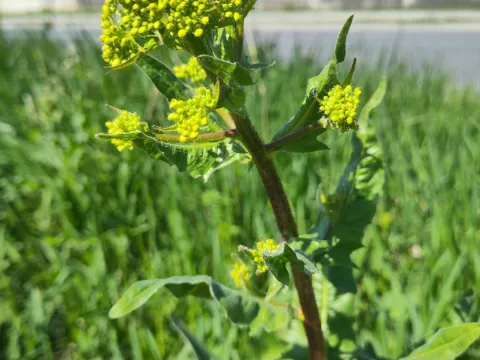
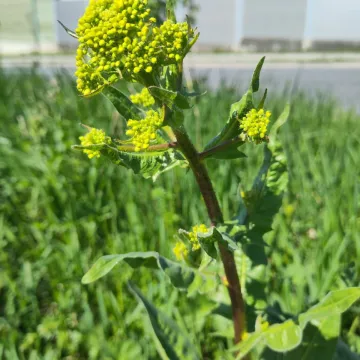
Botanically, the plant features a deep taproot that allows it to survive drought, and a branching stem that can reach heights of over one meter. Its leaves are distinctively serrated, and it produces a profusion of bright yellow flowers in late spring. The plant's ability to propagate via both seed and vegetative parts gives it a competitive edge in field conditions.
To ensure optimal yields, Turkish wartycabbage requires well-drained, fertile soil. While it can adapt to lower-quality land, fertilizer application and proper weed control during the seedling stage are essential for establishing a healthy, long-lasting stand. The crop is known for its longevity, often persisting for several years without the need for reseeding.
Regarding its utility, the crop is primarily harvested for silage, haylage, or direct grazing. It is particularly noted for its protein content and early availability. Farmers should remain vigilant against common pests of the Brassicaceae family, such as flea beetles and aphids, while also ensuring proper field management to prevent the potential spread of the plant to non-target areas.
Photo gallery