
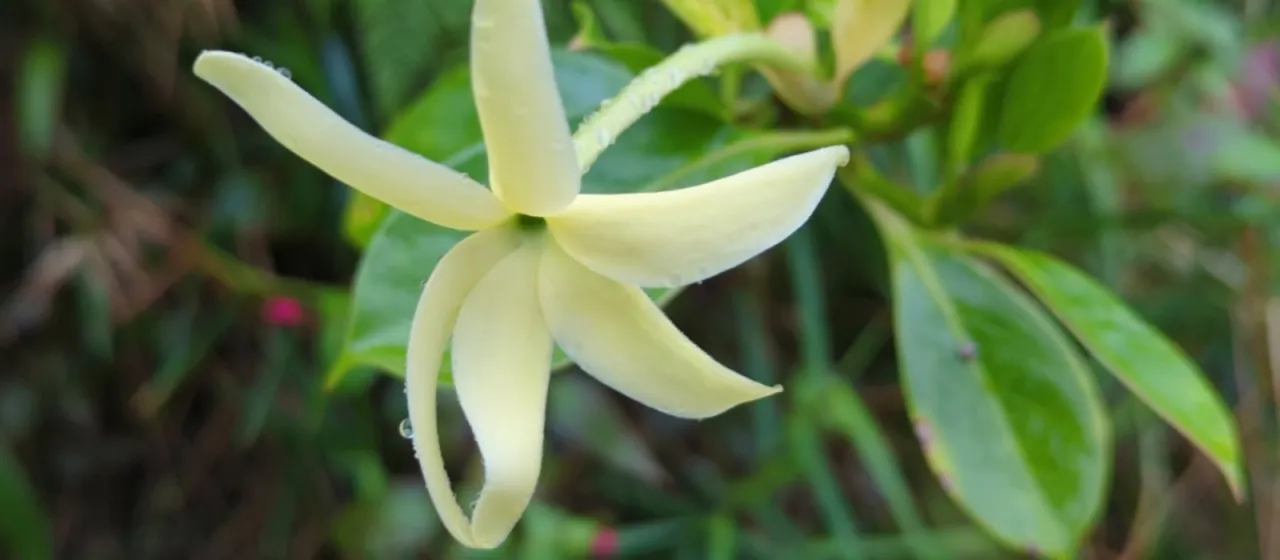
Description
Hillia parasitica is a perennial flowering plant belonging to the Rubiaceae family. Despite its taxonomic epithet, this species is not a parasite but rather an epiphyte. It naturally grows on trees within tropical rainforest ecosystems, where it utilizes specialized root structures to anchor itself onto host tree trunks, gathering nutrients from decaying organic matter and moisture in the air.
The native range of this plant extends across the tropical regions of Central and South America, as well as the Caribbean islands. It thrives in high-humidity environments characterized by consistent rainfall and filtered sunlight. Due to these specific origins, the plant is well-adapted to the stable, warm temperatures of the tropical canopy, making it highly sensitive to extreme temperature fluctuations or dry drafts.
Botanically, Hillia parasitica is distinguished by its succulent-like, deep green foliage and striking, fragrant white tubular flowers. These blossoms are evolutionarily optimized for pollination by specific pollinators found in their natural habitat. The plant's structure allows it to effectively store water, which is a crucial survival mechanism in its vertical forest environment.
Cultivation of this species requires mimicking its natural epiphytic habitat. A coarse, well-draining substrate composed of orchid bark, perlite, and charcoal is essential for root health. Frequent misting or the use of a humidifier is necessary to maintain the required atmospheric humidity. The plant thrives under bright, indirect light and requires a balanced, weak fertilizer application during the growing season to prevent salt buildup in the substrate.
Primary use of the species is focused on botanical collections and specialized interior horticulture. While it is a resilient plant, improper care can lead to specific health issues and pest infestations that growers must manage:
- Spider mites during periods of low humidity
- Mealybugs hiding in foliage axils
- Root rot caused by stagnant water in the root zone
- Fungal infections on leaves resulting from poor air circulation