Hippeastrum reticulatum
Hippeastrum reticulatum
Description
Hippeastrum reticulatum is a perennial bulbous plant belonging to the Amaryllidaceae family. It is distinct within the genus due to its elegant floral structure and the prominent reticulate (net-like) venation on its petals, which gives the species its botanical name.
This species originates from the tropical regions of South America, specifically Brazil. In its native habitat, it typically thrives in the understory of humid forests, where it benefits from dappled sunlight and soils rich in decaying organic matter, which defines its specific ecological needs.
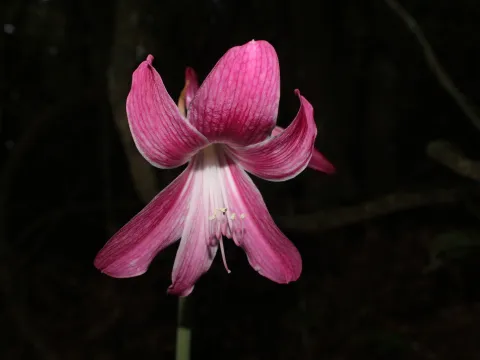
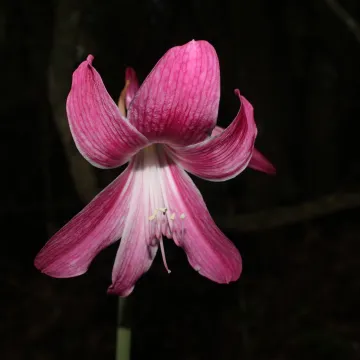
Botanically, the plant features dark green, strap-like foliage, often marked with a pale longitudinal stripe. The flowers are funnel-shaped, exhibiting soft cream to pinkish hues with delicate, darker veining. Unlike many commercial varieties, it maintains a unique look that appeals to botanical enthusiasts.
Cultivation requires a well-draining, nutrient-rich substrate, typically based on a mixture of leaf mold and coarse sand. As a tropical species, it demands consistent warmth and high humidity levels, making it particularly well-suited for greenhouses, conservatories, or controlled indoor environments.
- Light: Bright, indirect light to prevent leaf scorching.
- Watering: Consistent moisture during the growing season; keep drier when dormant.
- Substrate: Highly porous, organic-rich, and slightly acidic.
- Propagation: Offsets separation or seed sowing.
The primary economic and horticultural use of Hippeastrum reticulatum is as an ornamental plant. It is highly valued in the nursery industry and by collectors, serving as a vital genetic resource in breeding programs aimed at introducing new color patterns and resilience in hybrid cultivars.
Common pests include mealybugs and spider mites, which thrive in low-humidity settings. The most prevalent diseases involve bulb rot, usually triggered by poor drainage or overwatering. Maintaining a precise irrigation schedule and ensuring proper ventilation are key to preventing fungal infections such as Stagonospora curtisii.
Photo gallery