
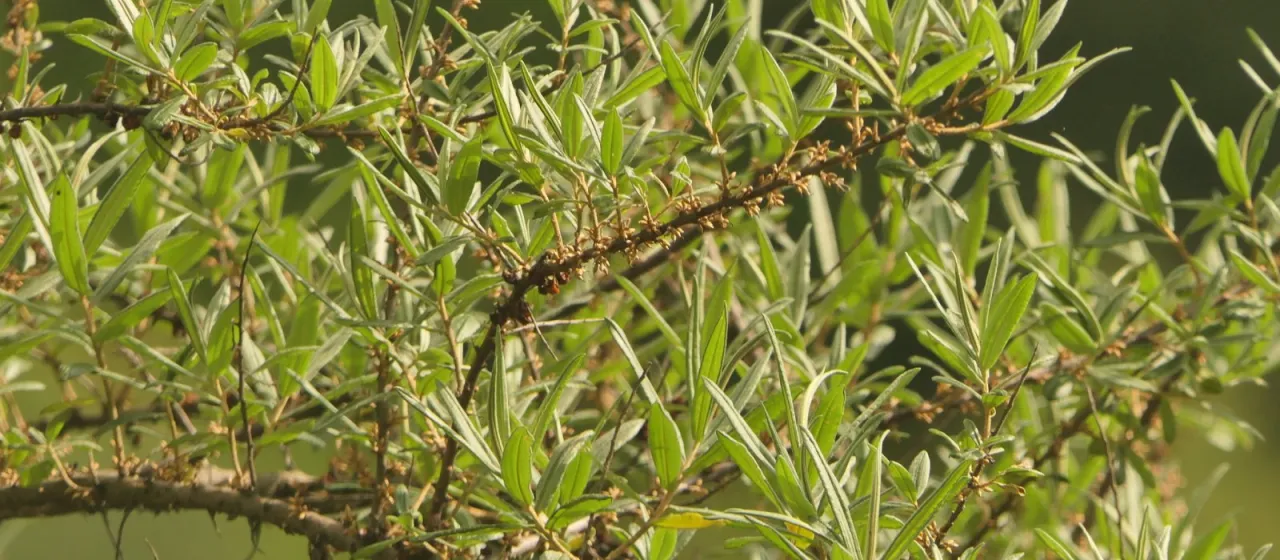
Description
Willow-leaved sea buckthorn (Hippophae salicifolia) is a perennial deciduous shrub or small tree belonging to the Elaeagnaceae family. It is distinct from the more common Hippophae rhamnoides due to its unique leaf structure, which resembles that of a willow tree. This species is highly specialized, having evolved to thrive in the rugged terrains of the high mountains.
The native distribution of this plant includes the Himalayan region, spanning across parts of Nepal, India, Bhutan, and China. It is typically found at altitudes ranging from 2,000 to 3,500 meters, predominantly growing along riverbeds and on rocky mountain slopes. Its natural habitat is characterized by extreme environmental conditions, which have shaped its resilient biological traits.
Botanically, the plant features narrow, lanceolate leaves with a characteristic silvery undersurface that serves as an adaptation to minimize water loss. The plant is dioecious, meaning separate male and female plants are required for pollination and fruit production. The fruits are small, yellow to orange-colored berries, highly valued for their high content of fatty acids and bioactive antioxidants.
Agricultural requirements for Hippophae salicifolia focus on providing well-drained, sandy, or stony soils with a neutral pH. The crop demands full sun exposure and is highly tolerant of drought once established. Unlike many other fruit crops, it does not require fertile soil, as it can form symbiotic relationships with nitrogen-fixing bacteria, allowing it to grow in nutrient-poor environments.
Economically, the species is utilized for both its fruits and its environmental benefits. Its deep and spreading root system makes it an excellent candidate for soil stabilization projects, preventing erosion on steep slopes and riverbanks. In terms of health, the berries are processed into oils and powders, widely used in dietary supplements and skincare products due to their restorative properties.
- Rich in essential fatty acids and vitamins.
- Superior soil erosion control properties.
- Nitrogen-fixing capabilities in poor soils.
- High adaptability to harsh alpine climates.