
Description
Hoary mustard (Hirschfeldia incana), also known as shortpod mustard, is a herbaceous perennial or biennial plant belonging to the Brassicaceae family. While often viewed as a persistent weed in agricultural landscapes, understanding its biology is crucial for effective farm management and the prevention of crop competition in both row and grain crops.
Native to the Mediterranean basin, this species has successfully naturalized across various continents, thriving in temperate and subtropical climates. Its ability to colonize disturbed sites, roadsides, and cultivated fields makes it a significant species in global agricultural ecology. It is especially prominent in areas with Mediterranean climate patterns where it outcompetes native flora.
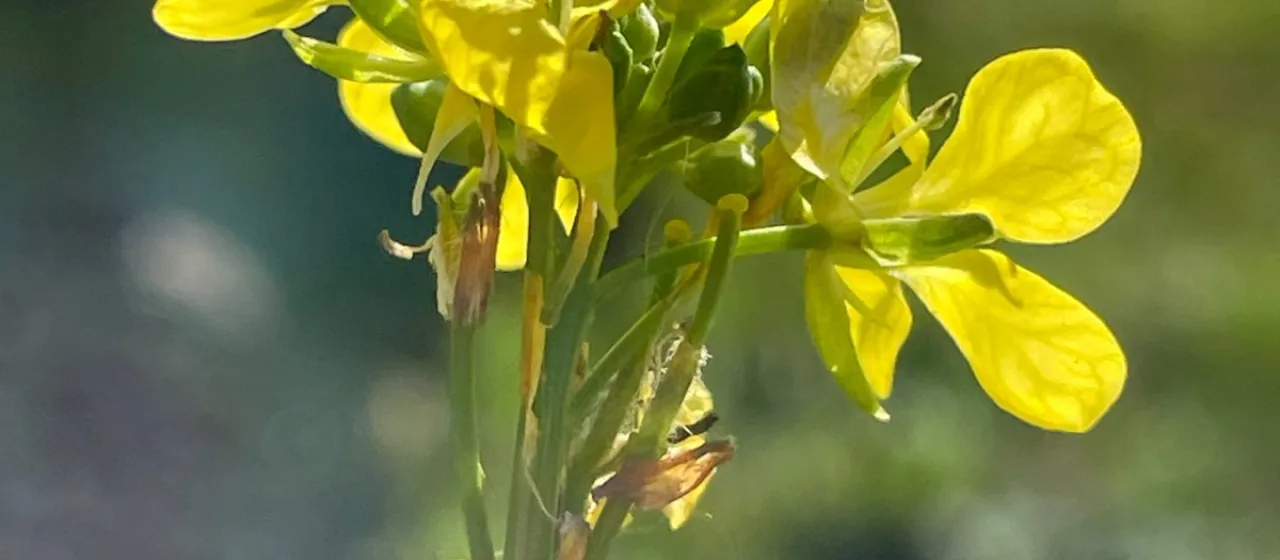
Botanically, Hirschfeldia incana is characterized by its rough, hairy leaves and branched stems that give it a greyish appearance. The plant produces dense racemes of yellow, four-petaled flowers. A distinctive feature is its deep taproot, which grants the plant remarkable resilience against drought and nutrient-poor soil conditions, allowing it to flourish when other plants struggle.
Agronomic requirements for this plant are minimal, as it is highly adaptable to various soil types, ranging from sandy loams to heavier clays. To manage it effectively within a crop rotation, farmers utilize integrated weed management (IWM) strategies. These include the use of pre-emergent herbicides, mechanical cultivation before the flowering stage to prevent seed dispersal, and competitive crop planting to suppress its germination.
In terms of agricultural utility and health, hoary mustard can serve as an early-season nectar source for beneficial insects. However, it is a known host for several agricultural pests, including the cabbage aphid and the rape stem weevil, as well as various viral diseases that plague commercial cruciferous crops. Because of this, it is generally managed as a serious pest in fields dedicated to canola or mustard production.