
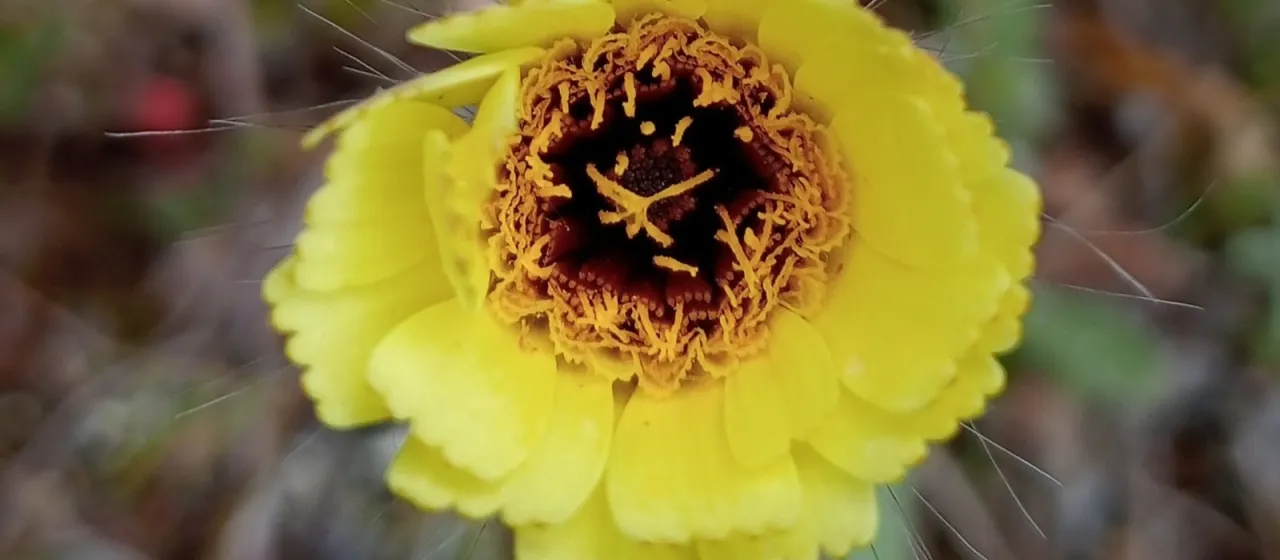
Description
Hispidella hispanica is a perennial herbaceous plant belonging to the Asteraceae family. While not a conventional agricultural crop, it is a significant botanical species known for its specific ecological niche and unique morphological adaptations to Mediterranean environments.
The plant originates from Southwestern Europe, with its primary distribution centered in Spain and parts of France. It thrives in open, stony habitats, often colonizing limestone-rich soils where few other plants can establish. Its natural range reflects its adaptation to mountainous and semi-arid landscape conditions.
Botanically, Hispidella hispanica is identified by its rosette of hispid (bristly) leaves, which helps minimize water loss. The stems are generally erect and support solitary yellow flower heads. These structures are typical of the Asteraceae family, designed for efficient pollination by local insect populations in rocky environments.
Cultivation requirements for this species are strict regarding drainage and light. To grow successfully, the plant requires excellent aeration of the soil and full sun exposure. It is highly intolerant of waterlogged conditions, particularly during the dormant winter season, which can lead to rapid decay of the root system.
Currently, the economic use of the plant is limited to specialized horticulture and the conservation of wild plant species. Its potential as a drought-tolerant ornamental is occasionally explored by enthusiasts of rock gardens and alpine flora, as it requires virtually no supplemental irrigation once established.
- Pests: Susceptible to spider mites in hot, dry greenhouse conditions.
- Diseases: Powdery mildew can occur in areas with stagnant airflow.