Yorkshire fog
Holcus lanatus L.
Description
Yorkshire fog (Holcus lanatus L.) is a perennial grass belonging to the Poaceae family. The plant is easily recognized by its soft, greyish-green foliage covered in fine hairs, which is a distinctive characteristic that gives the species its common English name.
Native to Europe, the plant has established itself globally as a common component of meadows, pastures, and disturbed land. It thrives in a wide range of temperate environments, from damp lowlands to more elevated, mountainous regions. Its ability to colonize various habitats makes it a resilient, albeit sometimes invasive, species in agricultural settings.
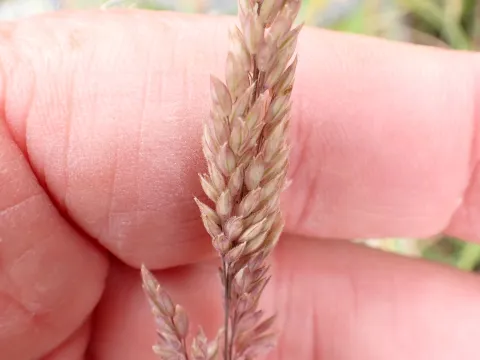
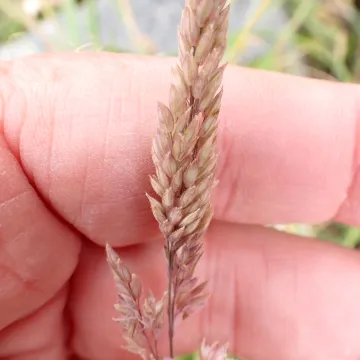
Botanically, Yorkshire fog produces tufted stems that can reach heights of 20 to 80 centimeters. The plant produces a panicle inflorescence that is often tinged with purple or pink. It reproduces efficiently through seeds, which are easily spread by wind and animals, allowing the species to establish large populations in suitable environmental conditions.
In terms of cultivation and soil requirements, the grass prefers moist, fertile, or acidic soils. It is particularly well-suited for sites that remain damp throughout the growing season. While it is not traditionally classified as a high-value agricultural crop, its tolerance to low-fertility soils allows it to contribute to the vegetative cover on marginal lands where other grasses might struggle.
The agricultural use of Yorkshire fog is primarily centered on forage production, although it is often considered inferior to other pasture grasses due to its hairiness, which can be unpalatable to livestock if left to grow too long. In terms of protection, the crop is susceptible to specific fungal diseases like rust and smut, while pest management usually focuses on controlling grass-feeding insects such as aphids and larvae of various flies.
Photo gallery