
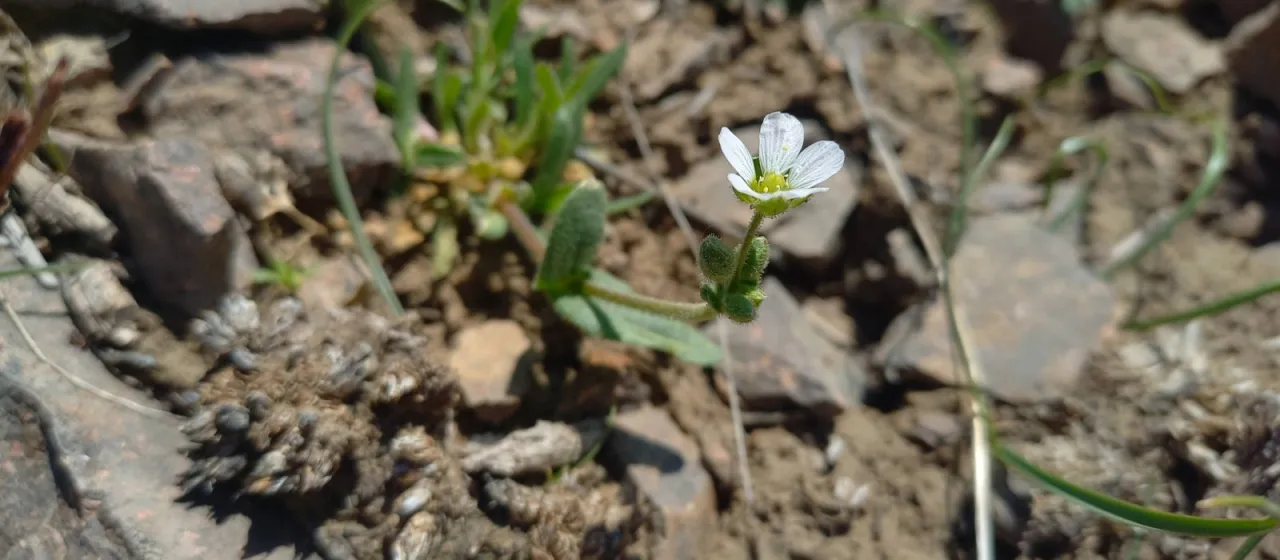
Description
Jagged chickweed (Holosteum glutinosum) is an annual herbaceous plant belonging to the Caryophyllaceae family. While primarily categorized as a weed in agricultural environments, understanding its life cycle is essential for integrated pest management in regions where it frequently occurs in fields and pastures.
This species is native to large parts of Eurasia. It is well-adapted to diverse climates, typically thriving in disturbed soils, rocky outcrops, and cultivated landscapes. Its ability to tolerate varying moisture levels makes it a resilient plant that can persist throughout the early growing season.
The plant is characterized by its glandular, sticky pubescence and small, white, five-petaled flowers arranged in umbel-like clusters. It usually grows to a modest height, with a slender stem and opposite leaves. Its root system is relatively shallow, which makes it susceptible to mechanical removal during standard soil tillage practices.
From an agricultural standpoint, managing Holosteum glutinosum involves standard weed control protocols, such as deep plowing and the use of pre-emergence or post-emergence herbicides depending on the crop. It is considered a minor competitor to major crops, but it can contribute to the overall seed bank if not managed effectively.
Common diseases affecting this plant include various fungal pathogens such as rusts and mildews, which may sometimes be transmitted to more economically significant crops of the same family. Despite its status as a weed, the plant provides minor ecological benefits, such as supporting early-season pollinators in wild areas.