
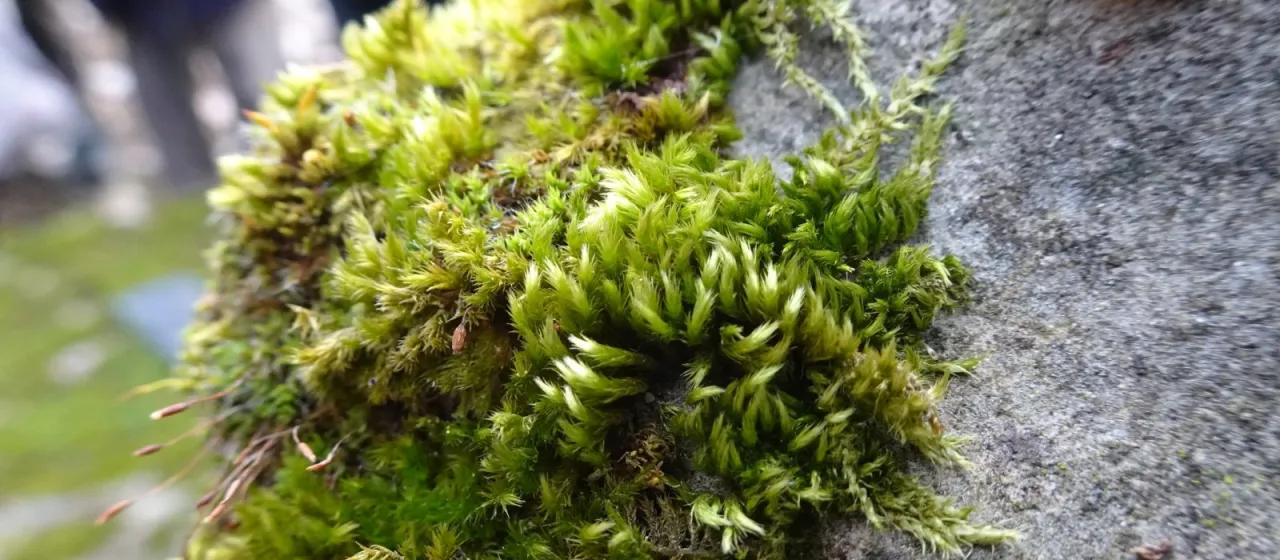
Description
Silky wall feather-moss (Homalothecium sericeum) is a perennial pleurocarpous moss belonging to the Brachytheciaceae family. While not a conventional agricultural crop, it is an essential organism in specialized plant production, increasingly valued in sustainable architecture, eco-design, and environmental research for its unique physiological properties.
The natural range of Homalothecium sericeum spans the temperate regions of the Northern Hemisphere, including Europe, North Africa, and parts of Asia. It primarily thrives as an epiphyte on the bark of deciduous trees, though it is frequently found on limestone rocks, masonry, and anthropogenic stone structures, demonstrating high environmental plasticity and adaptability.
Botanically, this species forms dense, glossy, and silky mats that vary from yellow-green to dark green. Its stems are creeping and highly branched, covered in small, lanceolate, longitudinally plicate leaves. A key survival trait is its ability to dry out during periods of water scarcity, where leaves press tightly against the stem to conserve internal moisture, allowing the plant to remain dormant until favorable conditions return.
Cultivation practices for this moss require careful management of micro-climatic variables rather than soil fertilization. Successful propagation relies on providing a consistent moisture supply and moderate light levels. The species thrives best on neutral to slightly alkaline substrates, making it ideal for specialized green-wall installations where concrete or mineral surfaces are predominant.
The economic and practical significance of this moss lies in its use for urban greening and bio-monitoring. As a biological indicator, it is highly sensitive to atmospheric pollutants, particularly sulfur dioxide, making it a living sensor for air quality control. In landscaping, it provides an aesthetic, low-maintenance cover that supports micro-biodiversity and enhances the thermal insulation of architectural surfaces.
- Excellent aesthetic properties with a distinct silky texture.
- Superior drought tolerance through specialized morphology.
- Low maintenance requirements in artificial conditions.
- High value as a reliable indicator of urban air quality.