
Description
Purple coltsfoot (Latin: Homogyne sylvestris) is a herbaceous perennial plant belonging to the Asteraceae family. Known in horticultural circles for its aesthetic appeal and shade tolerance, this species serves as an excellent ground cover for temperate woodland-style gardens. It is a specialized crop that thrives in environments where light levels are low and soil moisture is consistent throughout the season.
The species originates from the mountainous regions of Europe, specifically the Alps and the Dinaric Mountains. In its natural range, it occupies forest floors and edges where the climate remains cool and humid. Cultivation of Homogyne sylvestris is most successful in regions that provide a similar microclimate, allowing the plant to establish its creeping rhizomes and form dense, persistent foliage mats.
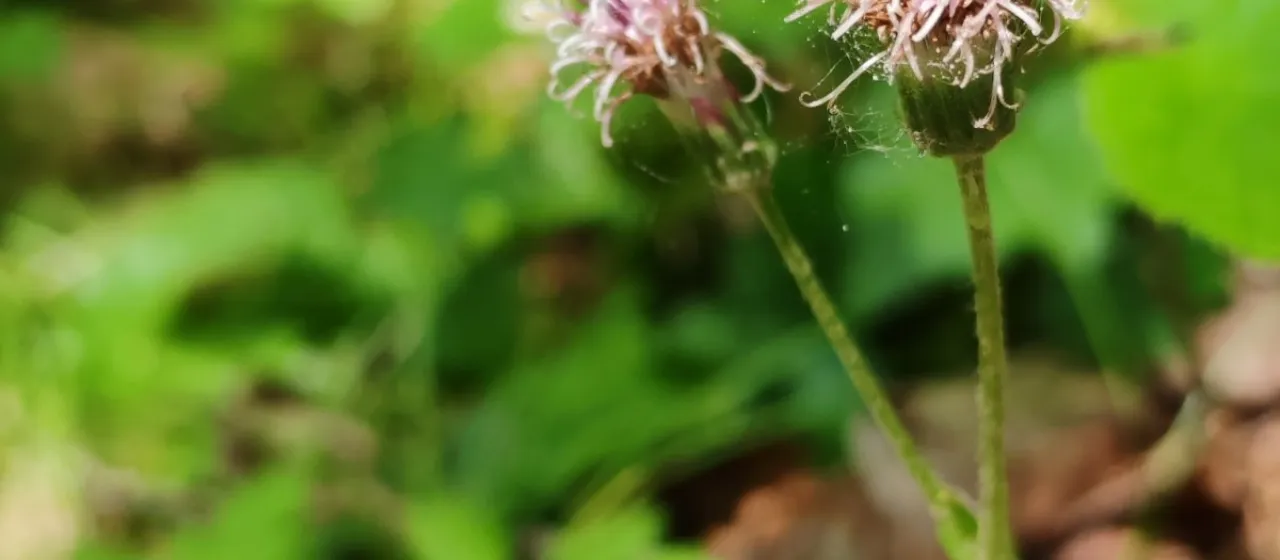
Botanically, the plant is characterized by its leathery, heart-shaped basal leaves that remain vibrant for most of the year. The flowering phase occurs on slender stems, producing distinct purple-to-pink flower heads that stand out against the deep green foliage. The plant relies on a spreading root system, which is its primary mechanism for expansion and survival in competing vegetation zones.
Cultivation requirements for purple coltsfoot focus on mimicking natural forest floor conditions. The plant demands a humus-rich, well-draining soil that retains moisture without becoming waterlogged. High atmospheric humidity is preferred, and the plants must be protected from intense heat and direct sunlight to prevent leaf scorch. Regular maintenance involves organic mulching to keep the root zone cool and moist.
The primary use of this crop is in landscape design, particularly for rock gardens, shaded borders, and moss-covered forest areas. Regarding plant health, Homogyne sylvestris is relatively robust but can be prone to fungal issues such as root rot if soil drainage is inadequate. Insect pests, including aphids and gastropods, may occasionally cause damage to young shoots, necessitating integrated pest management strategies for optimal growth.