
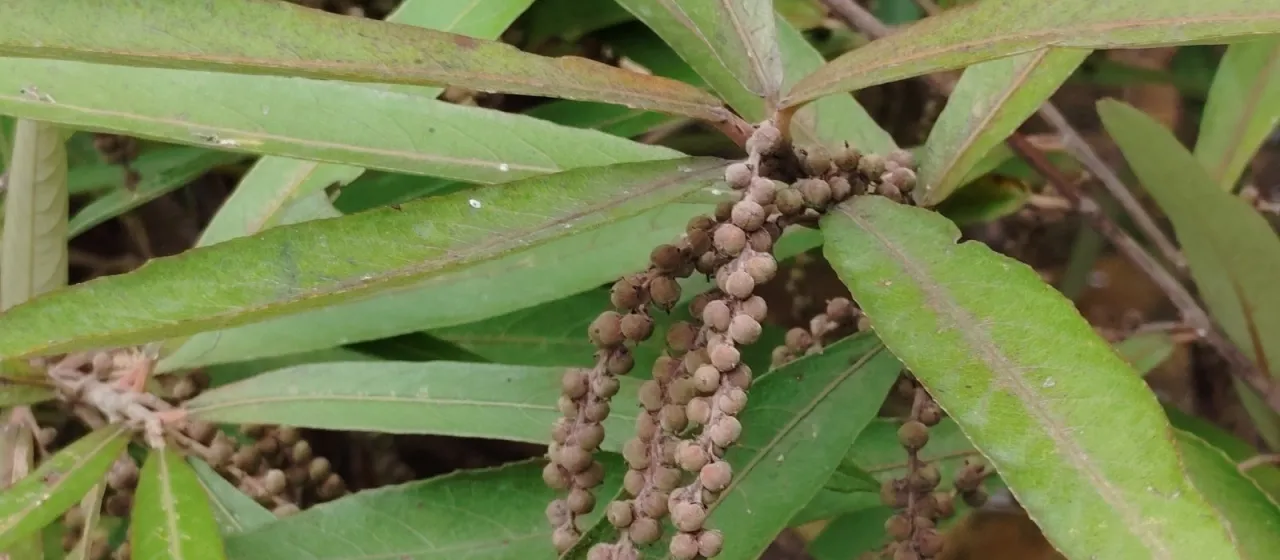
Description
Homonoia riparia is a distinctive evergreen shrub belonging to the Euphorbiaceae family. Often referred to as a riverine shrub, it displays a willow-like appearance with slender, lanceolate leaves that help it survive in fast-flowing water environments. Its resilience makes it a prime candidate for specific environmental restoration projects.
The native range of this species spans across the tropical regions of Southeast Asia, specifically in countries like India, Thailand, and the Philippines. It naturally inhabits rocky riverbanks and gravelly stream beds. These environments provide the constant water availability and high aeration levels that the plant requires to flourish.
Botanically, it features a sturdy, multi-stemmed structure that can reach heights of up to 3 meters. The leaves are typically linear to lanceolate, contributing to its graceful aesthetic. The flowers are small, arranged in spikes, and, while inconspicuous, play a key role in the plant's reproductive strategy within riparian zones.
In terms of agricultural and horticultural requirements, it thrives in well-drained, nutrient-poor substrates such as river pebbles or sandy loam. While it demands high moisture, stagnant water should be avoided. Cultivation success depends on simulating a flowing water environment, where oxygen reaches the roots consistently, preventing common fungal pathogens.
The plant has diverse хозяйственные (economic) uses. It is widely recognized for its ability to stabilize riverbanks, effectively preventing soil erosion during monsoon seasons. Furthermore, the species is valued in traditional medicine for its antimicrobial and anti-inflammatory properties. Potential pests include scale insects and spider mites, which can be managed with proper biological controls or regular leaf inspection.