Wax plant
Hoya carnosa (L. f.) R. Br.
Description
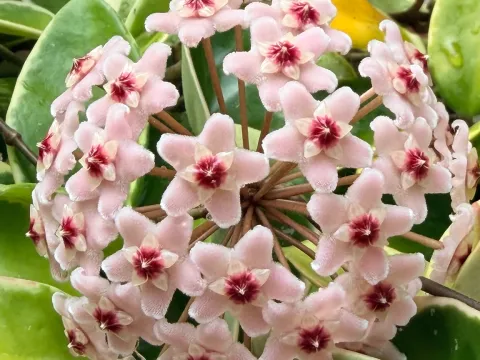
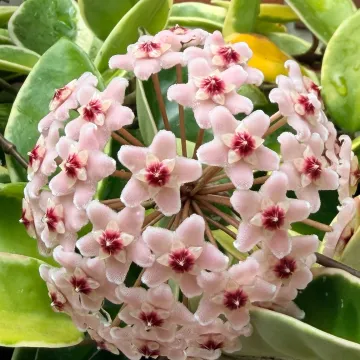
Hoya carnosa, commonly known as the wax plant or porcelain flower, is a robust vining species belonging to the Apocynaceae family. It is a highly valued ornamental plant appreciated by growers for its attractive, waxy foliage and clusters of fragrant, star-shaped flowers that bloom in summer.
Native to East Asia and Australia, this plant thrives in tropical and subtropical climates. In an agricultural and horticultural context, it is cultivated globally as an indoor ornamental crop, requiring managed greenhouse conditions or suitable microclimates in residential environments to flourish.
The plant features woody stems and fleshy, succulent-like leaves that are specialized to retain moisture, reflecting its adaptation to epiphytic growth habits. Its inflorescences are distinct, forming pendulous umbels with multiple small, star-shaped flowers that often produce nectar.
Optimal growth requires bright, indirect light, a well-draining soil mixture, and consistent watering practices. Proper cultivation involves allowing the soil to dry slightly between waterings to prevent root rot. Supplemental feeding with balanced liquid fertilizers during the active growth phase is recommended for plant vigor.
Hoya carnosa is primarily used in interior landscaping, greenhouses, and as a popular subject for botanical hobbyists. The species is susceptible to common pests, which are managed through integrated pest control. Typical issues include:
- Mealybugs
- Spider mites
- Scale insects
- Root rot due to overwatering
Photo gallery