
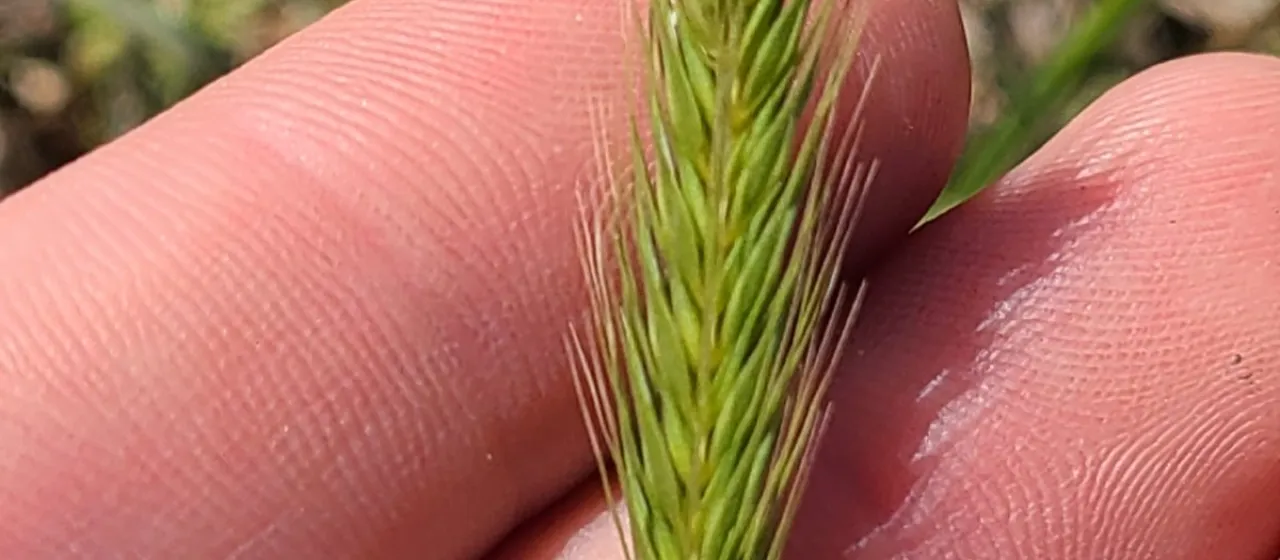
Description
Little barley (Hordeum pusillum) is an annual grass species belonging to the Poaceae family. This plant is known for its relatively small stature and its impressive ability to adapt to diverse soil conditions, including those that are saline or alkaline, where traditional cereal crops may fail to thrive.
The species is native to North America and is widely distributed across the United States and parts of Canada. It typically inhabits open areas, grasslands, and disturbed sites. Its ecological success is largely due to its opportunistic nature, allowing it to colonize environments where soil nutrients are poor or moisture availability is inconsistent.
Botanically, Hordeum pusillum is characterized by slender stems that generally grow to a height of 20 to 40 centimeters. The leaves are narrow and flat, and the inflorescence is a dense, erect spike. The plant is a cool-season grass, completing its reproductive cycle during the spring and early summer before the onset of the most intense heat.
In terms of agricultural and management requirements, little barley thrives in full sunlight and well-drained soils. While it is not a major commodity crop, it plays a role in rangeland management. Improving the productivity of areas where it grows often involves soil testing to manage salinity levels and proper rotational grazing practices to prevent overexploitation of the vegetation.
- Requires minimal supplemental irrigation in suitable climates.
- Shows high tolerance to soil alkalinity.
- Can be prone to common cereal diseases like rust and smut.
- Potential insect pests include aphids and various grass-feeding larvae.
Regarding its utility, little barley is primarily used as forage for livestock in its native range. While it lacks the grain yield of commercial barley (Hordeum vulgare), its resilience makes it a valuable component of pasture ecosystems, contributing to soil stability and providing early-season grazing before warmer-season forage becomes available.