
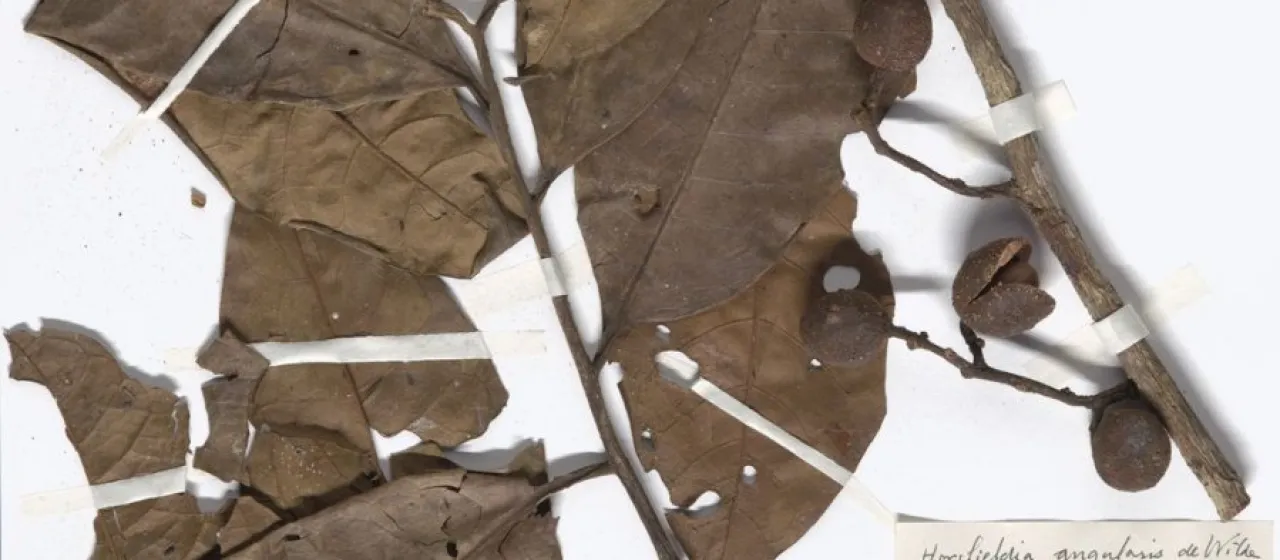
Description
Horsfieldia angularis is a woody plant species that belongs to the Myristicaceae family. While not a primary agricultural commodity on a global scale, it is a significant element of the tropical forest ecosystem in its native regions. The species is recognized for its biological structure and its potential utility as a source of local timber and oil-bearing seeds, characteristic of the wider nutmeg family.
The plant originates from the dense, humid tropical forests of Southeast Asia, particularly within the Indonesian archipelago. The geographic distribution of the species is defined by equatorial climatic patterns, where high levels of rainfall and constant warm temperatures prevail throughout the year. It typically thrives in lowland forests where soil moisture is consistently maintained.
Botanically, Horsfieldia angularis is characterized by a robust growth habit with coriaceous leaves arranged in an alternate pattern. The tree develops a complex root system adapted to deep forest soils. Its reproductive cycle involves the production of fruits containing seeds, which are often enveloped by an aril. These features are typical adaptations for survival and propagation within competitive tropical environments.
The cultivation requirements for this species focus on replicating its natural habitat. It necessitates fertile, well-draining soils with high organic content. Agricultural management is limited due to its forest-dwelling nature; however, successful propagation requires careful seed selection and protection from excessive weed competition in the early stages of growth to ensure the survival of saplings.
- Climatic zone: Tropical, equatorial.
- Soil preference: Moist, organic-rich, and well-drained.
- Major threats: Wood-boring insects and fungal pathogens.
- Economic use: Local construction timber and seed oil potential.
Regarding health management, the main pests affecting Horsfieldia angularis include tropical insects that target foliage and woody tissues. Furthermore, fungal infections may arise during extended rainy seasons, particularly in crowded stands. Effective silviculture for this species relies on maintaining tree health through thinning and monitoring environmental stressors to prevent disease outbreaks in forest plantations.