
Description
Hoslundia opposita is a perennial shrub belonging to the Lamiaceae family. It is a highly resilient plant native to tropical Africa, widely recognized for its medicinal properties and its role in traditional ecological systems. As an agricultural object, it is valued for its hardiness and versatility in tropical climates.
The plant originates from the tropical regions of sub-Saharan Africa. Its habitat includes forest margins, savannahs, and scrublands, where it thrives under various soil conditions. Due to its natural distribution, it is well-adapted to high temperatures and seasonal rainfall, making it a reliable crop for local farmers in its native range.
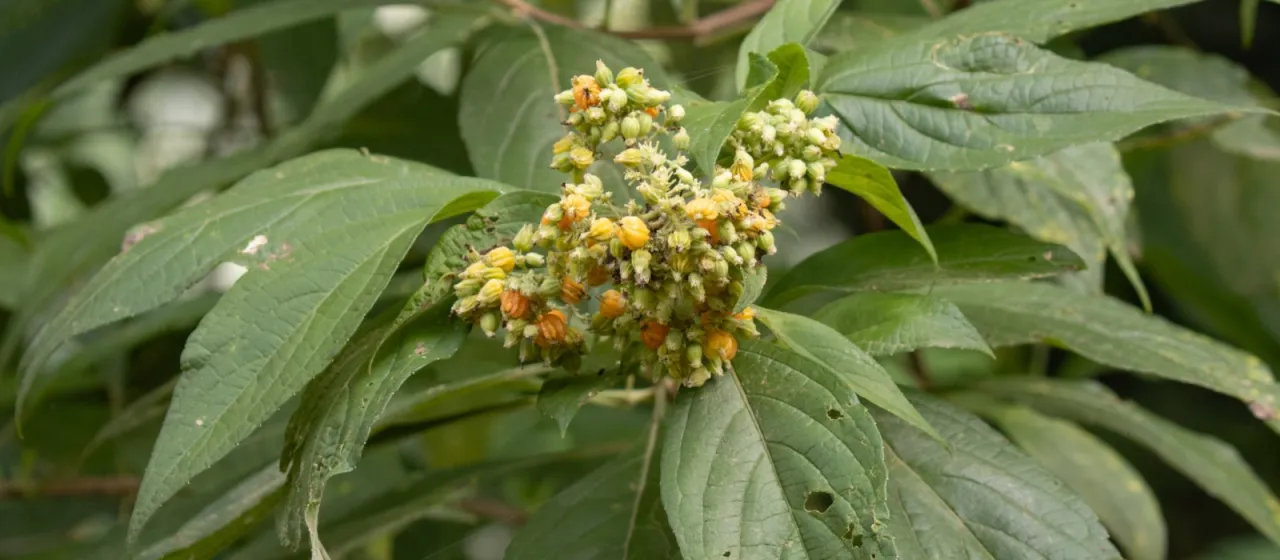
Botanically, Hoslundia opposita is characterized by its opposite, aromatic leaves and small flowers arranged in clusters. It typically grows as a dense, woody shrub reaching several meters in height. The fruits are succulent, orange to red berries that serve as a crucial food source for various bird species, which in turn aid in the plant's natural dispersal.
Agronomic requirements for Hoslundia opposita are relatively simple, emphasizing the need for well-draining soil and sufficient sunlight exposure. The plant can be propagated through cuttings or seeds, showing excellent vigor in its early growth stages. Pruning is recommended to manage size and promote dense growth, especially when utilized for fencing or hedgerows.
- Application in traditional medicine for treating inflammation and respiratory issues.
- Use in agroforestry as a living fence to delineate plots.
- Extraction of essential oils for potential industrial use.
- Serving as a food source for local biodiversity.
The economic and practical significance of Hoslundia opposita is primarily linked to its pharmacological potential. It is utilized in various regions as a natural remedy, with ongoing research focusing on its antimicrobial and antioxidant compounds. As interest in sustainable and medicinal crops grows, this shrub remains a valuable candidate for further agricultural development and ethnobotanical studies.