
Description
Hugonia griffithiana is a species of woody climber belonging to the Linaceae family. Unlike its well-known cousin, the common flax, this tropical plant adopts a climbing habit, using specialized hooks to scale forest structures in search of sunlight within dense ecosystems.
The native range of this species extends across the tropical regions of Southeast Asia, primarily found in the lowland forests of Malaysia and Indonesia. Its existence is intrinsically linked to high-humidity environments, where it thrives in the understory and forest canopy margins, maintaining its physiological activity throughout the year.
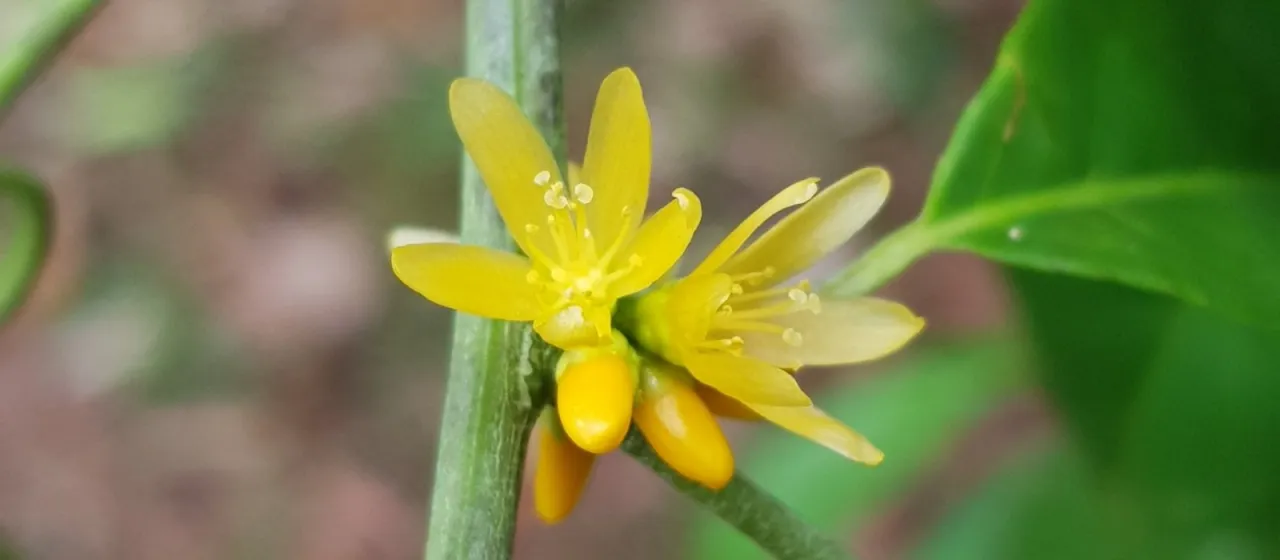
Botanically, Hugonia griffithiana is characterized by its woody stems, which produce unique, woody, recurved hooks used for climbing. The leaves are typically coriaceous, evergreen, and arranged in an alternate pattern. Its floral structure reflects the classic characteristics of the family, often producing small, radially symmetric flowers that attract pollinators specific to its native habitat.
The agrotechnical requirements for cultivating this species are strictly tied to tropical conditions. It requires a well-draining, acidic to neutral substrate enriched with forest mold. Due to its sensitivity to cold, the plant must be shielded from any temperature drops below 15°C and requires high ambient humidity to prevent leaf desiccation and promote vigorous development.
- Light requirements: Partial to bright, indirect sunlight.
- Watering regime: Consistent moisture; avoid waterlogged conditions.
- Soil type: High-organic forest floor mix with excellent aeration.
- Growth habits: Requires vertical support to thrive.
Economic and utility-based usage of Hugonia griffithiana is currently confined to botanical conservation and specialized academic research. While it is not a large-scale agricultural commodity, its biological makeup offers interesting possibilities for phytochemical investigation, as many plants within the Linaceae family contain unique secondary compounds that may be useful in medicinal applications.