
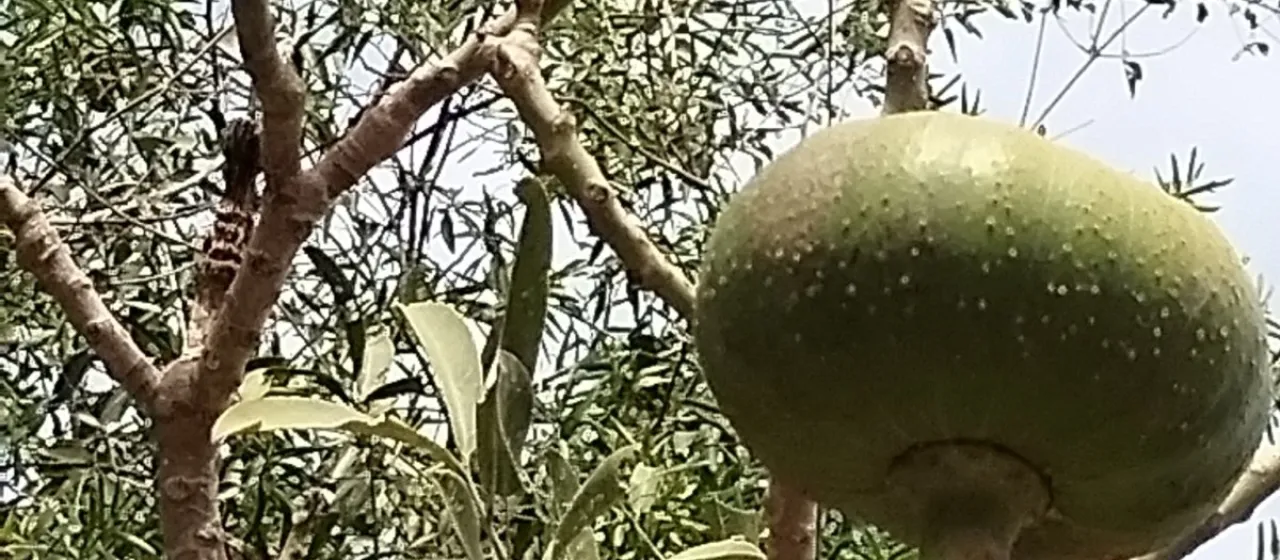
Description
Hura polyandra is a notable tree species belonging to the Euphorbiaceae family. It is often referred to in botanical contexts for its significant structural similarities to its better-known relative, Hura crepitans, although it possesses distinct morphological characteristics in its flowers and fruit development.
This species is native to the tropical forests of the Pacific coast of Mexico, Central America, and parts of South America. It thrives in regions characterized by high annual precipitation and consistently warm temperatures, often forming a component of the primary and secondary tropical forest canopy where it can reach impressive dimensions.
Botanically, the tree is identified by its robust trunk, which is usually armored with sharp, conical spines. The foliage consists of large, cordate leaves that provide significant shade. The flowers are unisexual, with male flowers arranged in elongated, dense racemes that exhibit a high stamen count, which distinguishes this species within the genus.
Cultivation requirements for Hura polyandra include a tropical climate with high humidity and fertile, well-drained loamy soils. In plantation settings, it is essential to ensure adequate spacing between trees to facilitate air circulation and minimize the risk of pathogen spread. While the tree is drought-tolerant once established, supplemental irrigation is recommended during the initial planting phase.
The economic value of this tree is primarily linked to its timber. The wood is light, relatively soft, and easy to machine, making it suitable for interior construction, plywood production, and craftwork. However, all parts of the tree contain a caustic, toxic latex that requires careful handling during harvesting and processing to prevent skin irritation or allergic reactions.
Common agricultural challenges and vulnerabilities include:
- Susceptibility to fungal pathogens in high-humidity, low-airflow environments.
- Infestation by wood-boring insects, which can compromise the structural integrity of the timber.
- Mechanical damage to the bark, which can provide entry points for secondary infections.