
Description
Hyalis argentea is a perennial herb belonging to the Asteraceae family. Known for its remarkable resilience, this plant is considered a promising candidate for agriculture in arid and semi-arid environments where water availability is a limiting factor for traditional crop production.
The species originates from South America, with its primary distribution centered in the drylands of Argentina. It has evolved to thrive in challenging environments characterized by high salinity, poor soil fertility, and frequent droughts, making it a robust survivor in its native habitat.
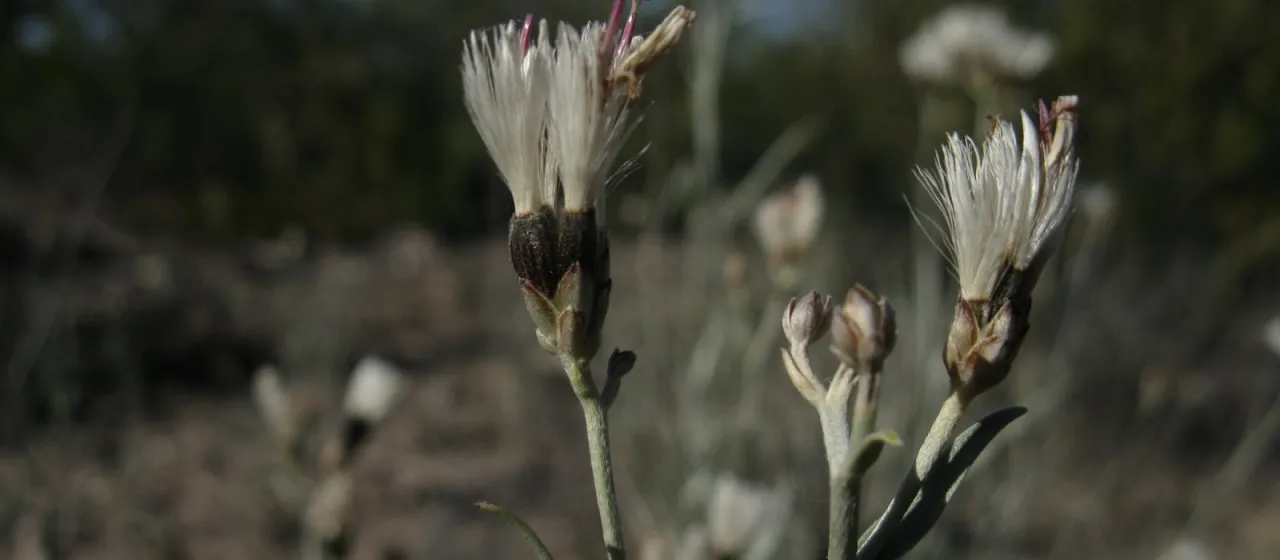
Botanically, Hyalis argentea is distinguished by its dense silver pubescence covering the leaves. This adaptation acts as a thermal barrier, reflecting excessive sunlight and reducing water loss through transpiration. The plant produces distinctive Asteraceae-type inflorescences that are highly attractive to local pollinators, including various bee species.
Regarding soil and climate requirements, the plant thrives in well-drained, sandy, or light-textured soils. It possesses a deep and efficient root system that allows it to access subsoil moisture. In terms of agronomy, it requires very little intervention, showing high tolerance to poor conditions, though establishment is best achieved in areas with minimal competition from weeds.
Agricultural uses for Hyalis argentea are primarily centered on its potential as a forage source for livestock in harsh climates where other crops fail. Additionally, its ability to stabilize loose, sandy soils makes it an excellent choice for erosion control programs and ecological restoration projects in degraded landscapes.
- Superior drought and heat tolerance
- Adaptability to saline and sandy soils
- Pollinator-friendly floral resources
- Effective soil stabilization properties