
Description
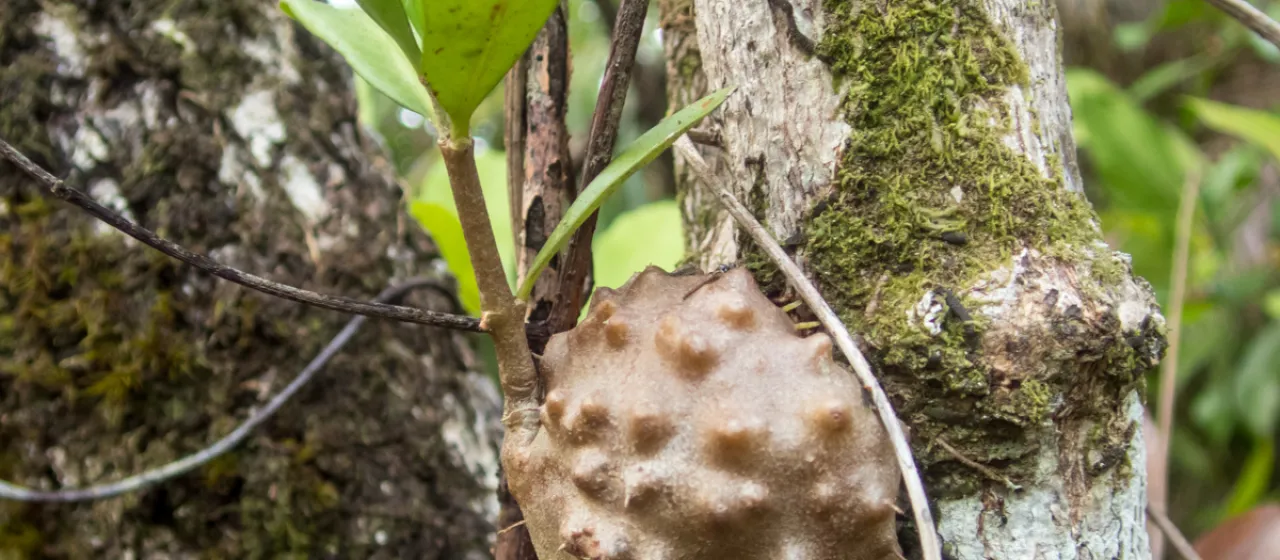
Ant plant, scientifically known as Hydnophytum formicarum, is a fascinating member of the Rubiaceae family. This species is world-renowned for its myrmecophily, a biological phenomenon where the plant and ants live in a mutually beneficial symbiosis within the plant's specialized structures.
Native to the tropical rainforests of Southeast Asia, including countries like Indonesia, Malaysia, and Thailand, this plant naturally thrives as an epiphyte. It anchors itself to the trunks or branches of host trees, extracting moisture and nutrients from the humid environment and the debris brought in by its ant inhabitants.
Botanically, the plant is characterized by a large, swollen caudex. This woody, tuberous base contains a network of chambers that serves as a permanent nest for ant colonies. In return for the shelter, the ants protect the plant from herbivores and contribute organic waste, which the plant absorbs through internal tissues to supplement its mineral intake.
To successfully cultivate this species, one must replicate its tropical habitat. Key requirements include consistent high humidity (70% or more), bright, filtered light, and warm temperatures, ideally between 22°C and 28°C. A free-draining, chunky medium, such as a mix of orchid bark, charcoal, and sphagnum moss, is essential to prevent root rot.
While primarily kept by botanical enthusiasts and collectors, the ant plant serves as a remarkable example of ecological adaptation. Growers must remain vigilant against pests such as mealybugs and spider mites, which can easily hide within the cavernous structure of the caudex. Maintaining a strict watering schedule and good ventilation is the best defense against fungal infections.