
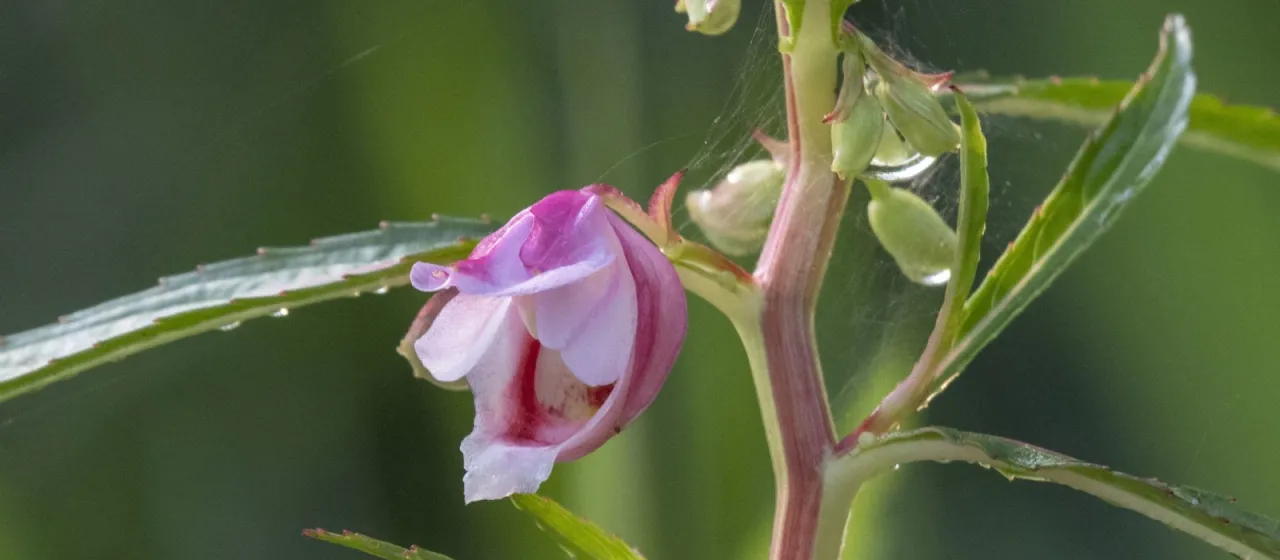
Description
Hydrocera triflora is a distinct herbaceous plant representing a monotypic genus within the Balsaminaceae family. Known for its semi-aquatic lifestyle, it has evolved specific structural adaptations to thrive in wetland ecosystems, distinguishing it from the more common terrestrial species found in the same botanical family.
The plant is native to the tropical regions of South and Southeast Asia, with a natural distribution spanning from India to Vietnam and Indonesia. It typically colonizes the edges of slow-moving streams, rice paddies, and the shallow margins of freshwater ponds, favoring habitats with high organic content and stable water levels.
Botanically, it features succulent stems that provide structural support in a water-saturated environment. The leaves are lanceolate and serrated, while the flowers are particularly notable for their vibrant colors, exhibiting a complex morphology that helps attract specific pollinators in its native tropical environment. The fruit is a drupe, which is another trait that separates it from other Balsaminaceae.
Regarding cultivation requirements, Hydrocera triflora demands warm temperatures and consistent moisture. It performs best in nutrient-rich, silty soils that mimic the tropical riverbanks of its origin. Proper light exposure, preferably bright but diffused, is critical for healthy flowering and vegetative development throughout the growing season.
The economic value of this culture lies primarily in ornamental water gardening and potential pharmaceutical research due to its unique secondary metabolites. While it is not a large-scale industrial crop, its role in ecological restoration of wetlands is gaining attention. Growers should monitor for common pests such as aphids and fungal diseases, which can proliferate in stagnant or overly humid conditions if air circulation is insufficient.