
Description
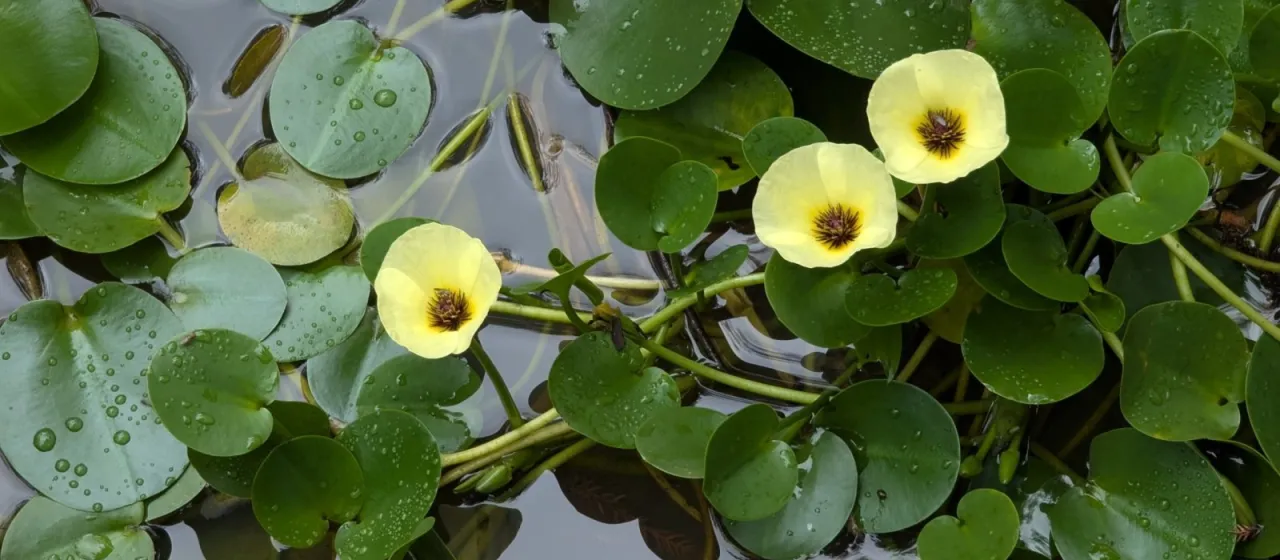
Water poppy (Hydrocleys nymphoides) is an attractive perennial aquatic plant belonging to the Alismataceae family. Often referred to as "water poppy" due to its distinct, three-petaled yellow flowers that resemble the common poppy, this plant is a staple for gardeners interested in creating vibrant, lush aquatic environments.
Originating from tropical South America, the plant is naturally found in shallow, slow-moving or stagnant water bodies such as marshes, ponds, and slow streams. It has successfully adapted to various warm-climate regions worldwide, where it is cultivated in water gardens and artificial ponds for its high ornamental value and rapid spreading capabilities.
The botanical structure of the water poppy includes floating or submersed stems that root into the substrate. The leaves are smooth, thick, and heart-shaped, forming an elegant mat on the water surface. The iconic flowers are borne on long stalks and have a distinctive bright yellow color with a dark center, which attracts various pollinators while providing excellent visual appeal in a pond setting.
Cultivation requires specific environmental conditions, primarily focusing on warmth and light. As a tropical species, it cannot withstand frost, meaning it must be treated as an annual or overwintered indoors in cooler regions. The plant thrives in rich, silty, or loamy soil and prefers shallow water where it can establish a strong root system, eventually covering the surface with its attractive foliage.
- Ideal water temperature: 20–28°C.
- Light requirements: Full sun for maximum blooming.
- Propagation: Easily done by division of runners or stem cuttings.
- Planting depth: 10–45 cm below water level.
- Maintenance: Thinning is necessary to prevent overgrowth.
In terms of хозяйственное usage, the water poppy is primarily used for pond aesthetic enhancement and water purification. By covering the water surface, it provides shade to submerged aquatic life and helps outcompete invasive algae by absorbing dissolved nutrients. It is an excellent choice for ornamental gardening but should be managed carefully to ensure it does not escape into local natural water systems.