
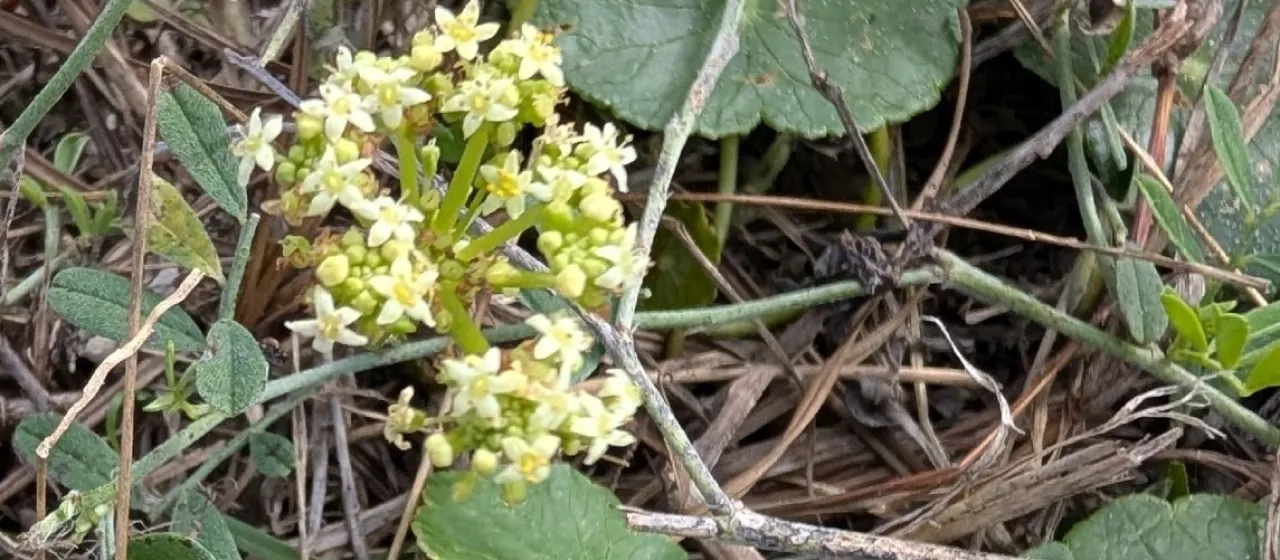
Description
Buenos Aires pennywort (Latin: Hydrocotyle bonariensis) is a perennial herbaceous plant belonging to the Araliaceae family. Although not a primary agricultural crop in terms of mass food production, it is highly valued as a specialized aquatic and semi-aquatic plant used in landscaping, paludariums, and ornamental water feature management.
The native distribution of this species is centered in South America, particularly in regions such as Argentina and Brazil. Historically, the plant adapted to coastal habitats, sandy dunes, and saturated soil conditions near water bodies. This evolutionary history makes it an excellent candidate for stabilizing damp, marshy environments where other vegetation might struggle to take root.
Botanically, the plant is characterized by its distinct peltate (shield-shaped) leaves that arise from long, succulent petioles. The plant grows via horizontal stems known as stolons, which crawl across the surface and sprout roots and leaves at each node. This growth habit allows it to form dense, mat-like colonies that can cover significant surface areas in a short time.
Cultivation requires close attention to moisture levels, as the plant is highly intolerant of drought. It thrives in well-draining, nutrient-rich soils that remain perpetually damp or submerged. While it prefers warm temperatures and moderate to bright light, it is sensitive to frost, which limits its perennial growth to tropical and subtropical climates; in cooler regions, it must be grown as an annual or brought indoors.
- Requires consistent saturation of the root zone.
- Responds well to frequent pruning to manage growth.
- Propagates easily through stolon division.
- Ideally suited for bog gardens and shallow water settings.
In terms of management, the main focus is preventing overgrowth, as the plant's aggressive rooting system can quickly dominate smaller water features. Common pests include aphids and spider mites, usually appearing if the ambient humidity drops significantly. Maintaining proper airflow and humidity levels is the best defense against fungal infections and wilt in greenhouse or container environments.