
Description
Taiwan pennywort (Hydrocotyle formosana) is a perennial herbaceous plant belonging to the Araliaceae family. Although historically associated with the Apiaceae family, recent botanical revisions have refined its taxonomic classification. This creeping plant features prostrate stems that readily root at the nodes, creating dense, lush green ground cover in favorable environments.
The natural habitat of this crop spans East Asia, specifically Taiwan, China, and adjacent territories. The plant thrives in moist, marshy conditions, along water margins, and in shaded areas with significant precipitation. In an agricultural context, it is considered a promising crop for wetland farming and specialized landscaping projects.
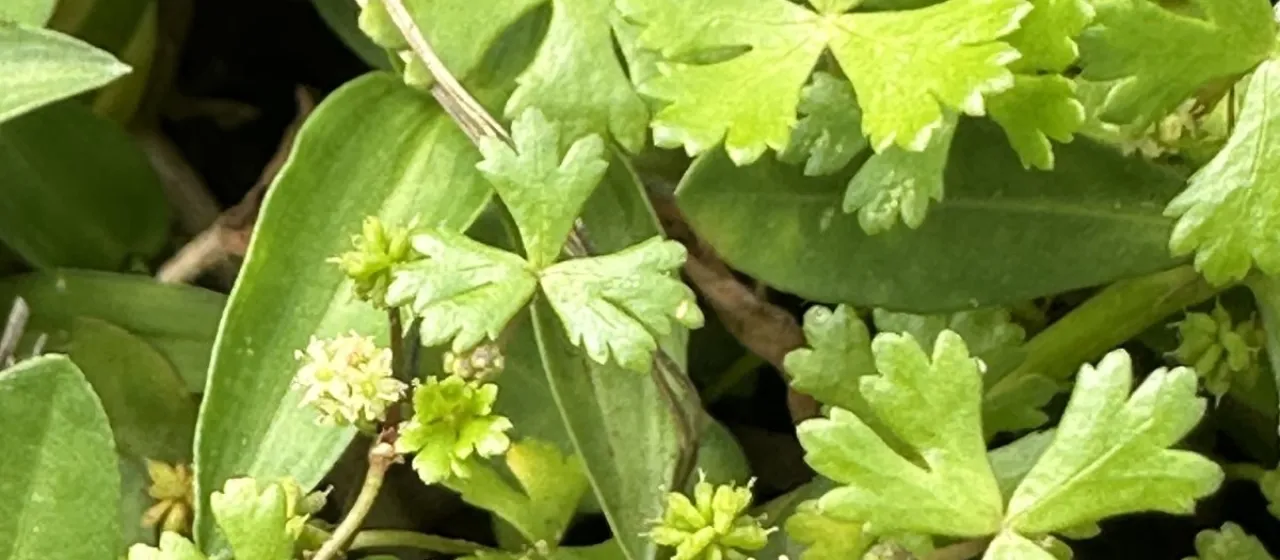
Botanically, Hydrocotyle formosana is characterized by distinctively rounded leaves with heart-shaped bases, attached to long petioles. The plant displays strong vegetative growth potential. Its small, whitish or greenish flowers are clustered into simple umbel inflorescences, a hallmark feature of the family members.
Successful cultivation requires specific climatic conditions, primarily high humidity levels and consistent soil moisture, alongside stable temperatures that avoid extreme frost. The ideal growing medium consists of fertile, loamy, or silty substrates with a neutral to slightly acidic pH. Effective agronomy necessitates steady hydration and protection of the root system from desiccation.
- Propagation via vegetative cuttings.
- Consistent irrigation to maintain a hydromorphic regime.
- Preventative measures against fungal diseases in stagnant air.
- Management of diffused lighting conditions.
The economic utility of the Taiwan pennywort includes its traditional use as medicinal raw material and its application as a ground cover plant for land reclamation in moist areas. In modern agronomy, it is frequently cultivated within hydroponic systems or specialized greenhouses where water quality and nutrient profiles are precisely managed.
Typical cultivation challenges include susceptibility to leaf spots and root rots, which flourish under high humidity combined with poor ventilation. Pests, including aphids and spider mites, can pose threats in controlled environments; therefore, rigorous phytosanitary monitoring is an essential component of routine crop management.