
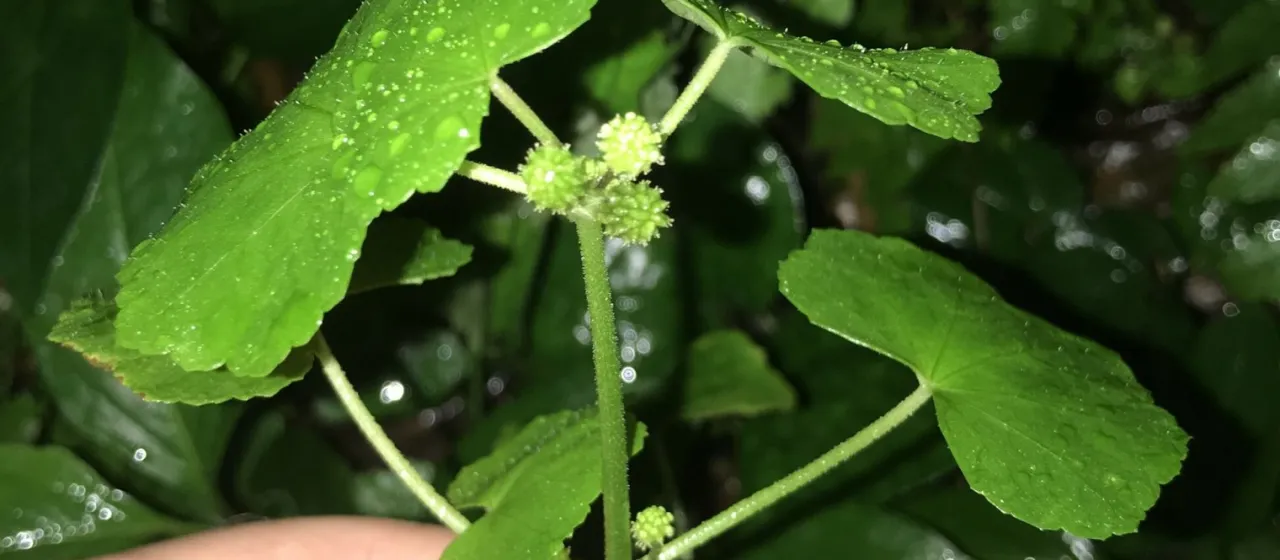
Description
Javanese pennywort (Hydrocotyle javanica Thunb.) is a perennial herbaceous plant belonging to the Araliaceae family. It is recognized for its creeping, stoloniferous growth habit, which allows it to spread rapidly across moist ground, making it a distinctive species within its botanical genus.
The plant originates from the tropical regions of Southeast Asia, including parts of India, China, and Indonesia. Its natural habitat includes wet meadows, riverbanks, and shaded forest understories. In agricultural practice, it is valued for its potential in producing biomass for medicinal preparations and culinary applications, primarily in tropical farming systems.
Botanically, the plant features cordate or reniform leaves with crenate margins, borne on long petioles. The stems are slender and node-rooting, providing the plant with excellent propagation capabilities. Its inflorescences are simple umbels consisting of tiny, greenish-white flowers, which bloom under favorable moisture conditions throughout the year in its native range.
Cultivation requirements focus on moisture management and soil quality. The species thrives in fertile, well-draining yet constantly moist soils with an acidic to neutral pH. It is highly sensitive to drought and direct, intense sun, requiring partial shade to maintain foliage quality. Agronomic management involves consistent irrigation and periodic thinning to prevent the overcrowding of creeping stems.
Economically, Javanese pennywort is primarily cultivated for its bioactive compounds, which are often used in traditional remedies for skin conditions and anti-inflammatory purposes. Common pests include slugs and snails, which can cause significant damage to the succulent leaves. Disease management is critical, as fungal pathogens, particularly root rot, can arise if the soil drainage is inadequate in high-humidity cultivation environments.