
Description
Hydrocotyle maritima is a perennial herbaceous plant belonging to the Araliaceae family. While historically linked to the Apiaceae family, current botanical classification places it firmly within the Araliaceae. This species is widely recognized for its creeping habit and its ability to thrive in wet, sandy, and maritime environments, making it a distinct subject of botanical interest.
The native range of Hydrocotyle maritima includes coastal zones, dunes, and marshes across tropical and subtropical regions, particularly in Asia and the Pacific islands. Its natural habitat is characterized by loose substrates and high humidity levels, which dictate its specific requirements when cultivated in nurseries or controlled landscapes.
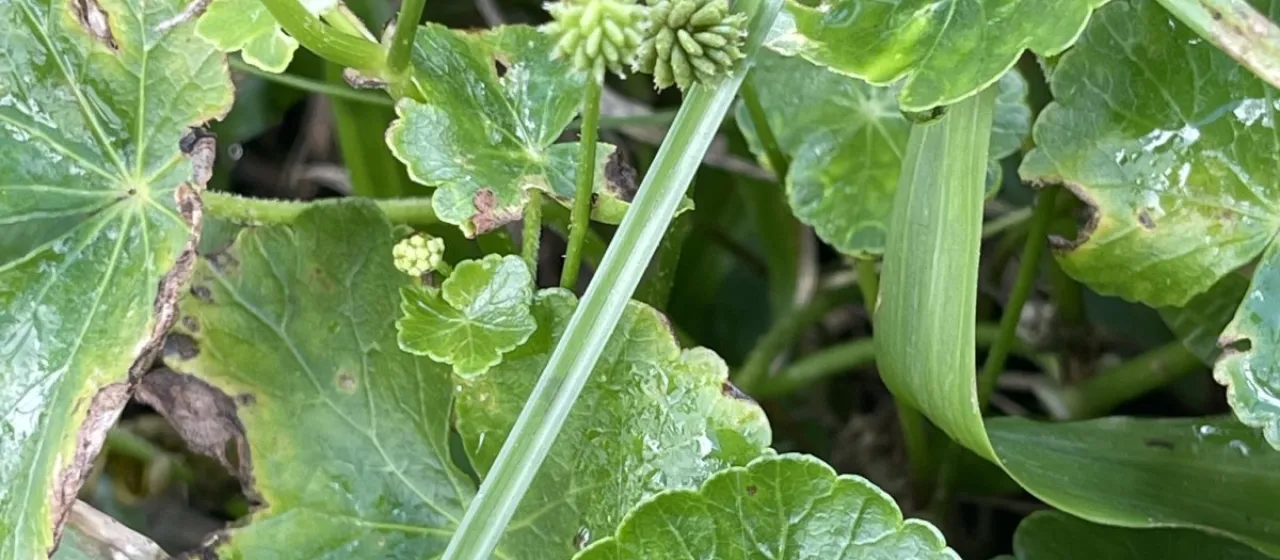
Botanically, the plant is characterized by its prostrate stems that root at the nodes, allowing it to spread rapidly across the soil surface. The leaves are typically peltate (shield-shaped) with scalloped margins, supported by long petioles. The flowers are small and inconspicuous, usually clustered in simple umbels, which is a common trait among species within the Araliaceae family.
Cultivation requirements for this crop focus on maintaining high moisture levels in the substrate. It prefers well-aerated, sandy-loam soils with a slightly acidic to neutral pH. In agricultural practice, it is essential to ensure consistent watering, as the plant does not tolerate prolonged drought. During the growing season, moderate nitrogen fertilization is recommended to maintain the vibrancy and density of the foliage.
Common хозяйственное use includes:
- Ornamental landscaping for pond and water garden margins.
- Ground cover in greenhouse environments.
- Stabilization of sandy slopes and dunes in coastal areas.
- Educational purposes in botanical gardens and research stations.
Regarding pest and disease management, the plant is generally robust, but it can be susceptible to root rot if the substrate remains saturated without adequate aeration. Pests such as aphids and spider mites may occur, particularly if the plant is grown in low-humidity environments. Integrated pest management, focusing on proper spacing and irrigation, is the primary method for ensuring a healthy crop.