
Description
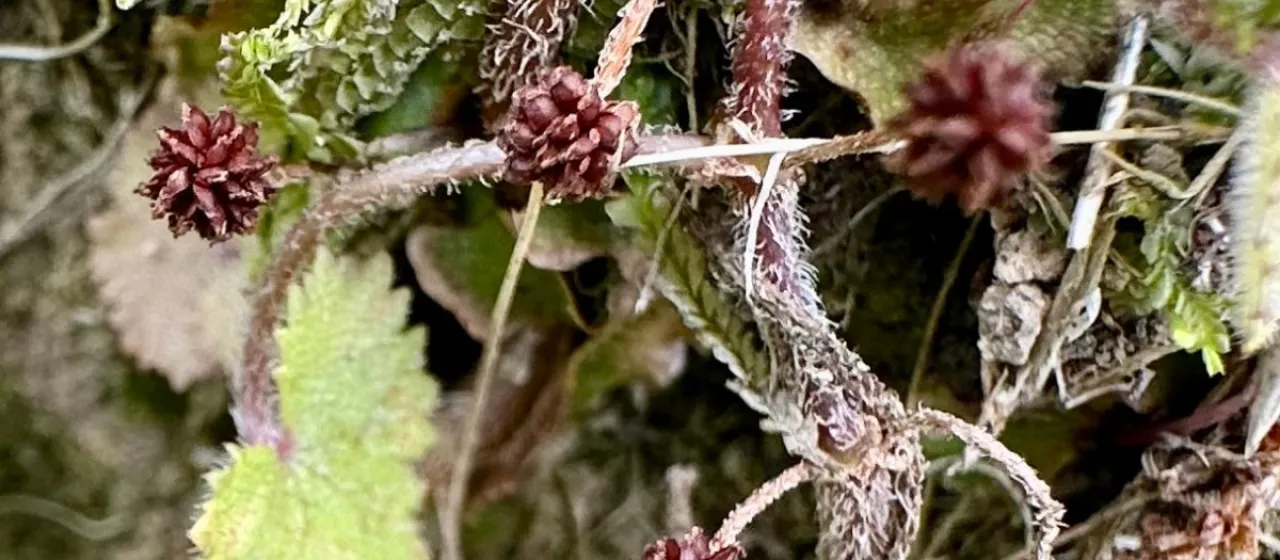
Musk pennywort (Latin: Hydrocotyle moschata) is a creeping perennial herb belonging to the Araliaceae family. It is characterized by its prostrate growth habit, forming dense mats of foliage that spread via stolons which readily root at the nodes. This morphological feature allows it to cover bare ground rapidly in suitable environmental conditions.
The species is native to New Zealand and various Pacific islands. Its natural habitat includes damp forest floors, stream banks, and wetlands where shade and humidity are abundant. Because of its resilience and ability to thrive in moisture-rich environments, it has been introduced to various parts of the world, particularly in temperate regions with maritime influences.
Botanically, the plant features orbicular or kidney-shaped leaves on long, slender petioles. The inflorescences are simple umbels bearing tiny, insignificant greenish or yellowish flowers. The plant derives its common name, musk pennywort, from the distinct musky scent released when the foliage is bruised or crushed. Its root system is fibrous and shallow, adapted for life in moist soils.
For successful agricultural production, it is essential to provide a location with partial shade, as direct, intense sunlight can cause leaf scorching. The soil should be consistently moist, rich in organic matter, and slightly acidic to neutral in pH. Irrigation management is the most critical aspect of its cultivation; the plant will quickly wilt and decline if exposed to prolonged drought or dry soil conditions.
The primary use of this crop is as a functional ground cover in landscapes to prevent soil erosion and weed suppression. In some traditional contexts, it is utilized for its mild medicinal properties. While the plant is generally hardy, it is susceptible to root rot and fungal diseases if planted in heavy soils with poor drainage. Regular monitoring of drainage quality is recommended to maintain a healthy and vigorous stand.