
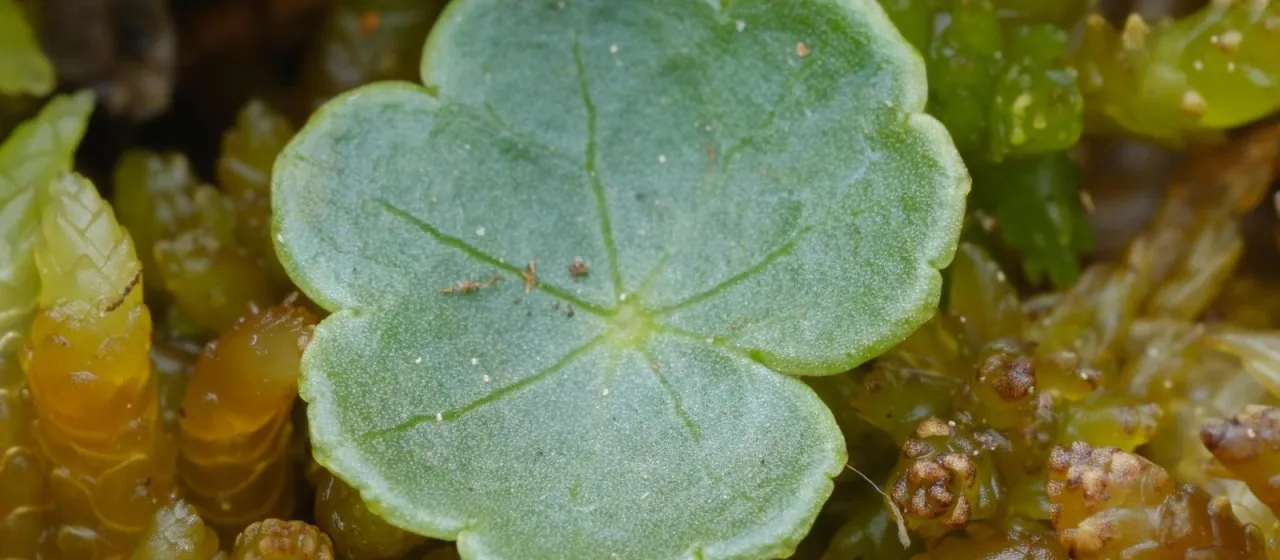
Description
Marsh pennywort (Latin: Hydrocotyle vulgaris) is a perennial herbaceous plant belonging to the Araliaceae family. It is a highly moisture-dependent species that thrives in wetland environments. Due to its creeping growth habit and attractive peltate leaves, it has become a popular choice for both water gardening and specialized horticultural applications.
The plant originates from Europe and parts of North Africa. Its natural habitat consists of marshes, damp meadows, and the margins of ponds and streams. It is well-adapted to temperate climates and requires a consistent water supply to thrive. In its natural range, it functions as a primary colonizer of wet, nutrient-rich soils, spreading rapidly through its network of stolons.
Botanically, the species is distinguished by its circular, shield-shaped leaves that arise from long petioles. The plant grows horizontally, rooting at the nodes along its stems, which allows it to form dense, mat-like patches. Its flowers are small and inconspicuous, appearing in clusters during the growing season, which contributes to its subtle aesthetic appeal in a garden setting.
The cultivation requirements for Hydrocotyle vulgaris are centered on moisture management. It grows best in rich, slightly acidic to neutral soils that remain consistently wet throughout the year. It does not tolerate drought conditions and performs best in partial shade, where the soil moisture is preserved. In an agricultural or nursery setting, regular thinning is necessary to prevent overcrowding and to maintain plant health.
The primary economic and aesthetic uses of marsh pennywort include:
- Ornamental aquatic landscaping for pond edges and water features.
- Utilization as a specialized ground cover in bog gardens.
- Usage in terrariums, paludariums, and high-humidity greenhouse environments.
Regarding plant health, marsh pennywort is susceptible to fungal issues if provided with poor airflow or stagnant water conditions. Pests such as aphids and spider mites can become an issue, particularly if the plant is grown in less-than-ideal conditions where its vitality is compromised. Maintaining good circulation and avoiding excessive fertilizer buildup are the primary methods for preventing these common issues.