
Description
Hydrophylax maritima is a perennial creeping plant belonging to the Rubiaceae family. This species is highly specialized for life in harsh coastal environments, where it serves as a pioneer species in the colonization of sand dunes and sandy beaches.
The plant originates from the coastal regions of the Indian Ocean, including parts of tropical Asia and Africa. Its native range is strictly defined by the proximity to the sea, as the plant has evolved to thrive in soils with high salinity and low nutrient content, typically found in maritime environments.
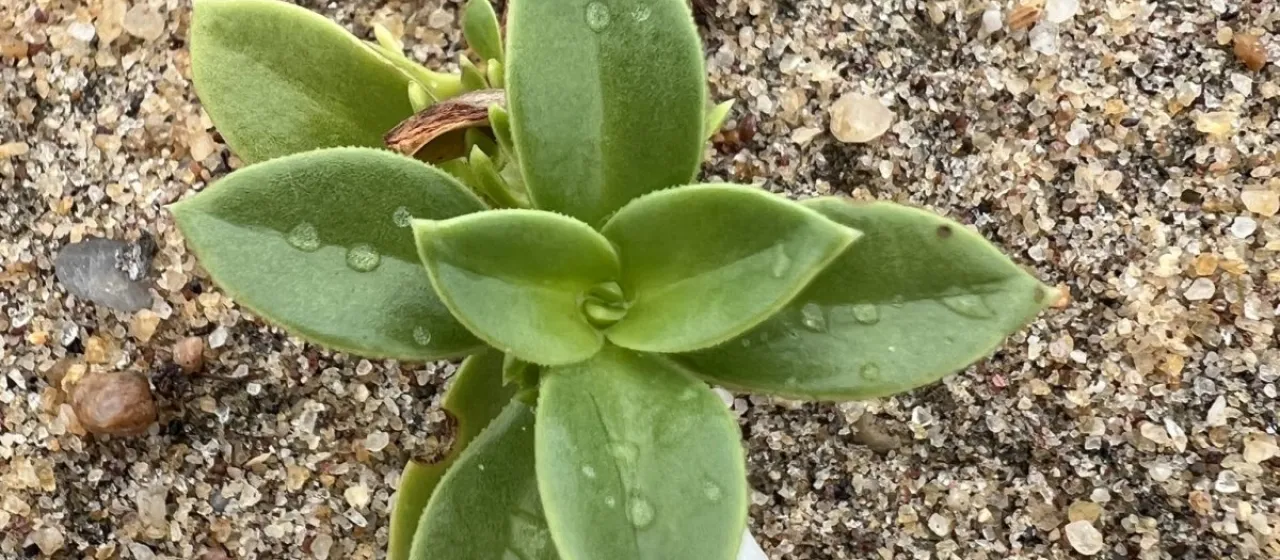
Botanically, it is characterized by trailing, succulent stems that root at the nodes, forming dense carpets that protect the soil surface. The leaves are thick and leathery, an adaptation to conserve moisture under intense sunlight and constant sea breeze. The attractive blue to violet flowers are a distinguishing feature, appearing as solitary blossoms along the creeping stems.
Cultivation requirements for this crop focus on imitating its natural sandy habitat. It demands full sun exposure and well-draining, sandy soil. Irrigation should be minimal and carefully controlled, as the plant is highly susceptible to root rot if the soil remains waterlogged. It thrives in conditions that would be lethal to most standard agricultural crops.
The primary agricultural and environmental use of Hydrophylax maritima is the stabilization of coastal dunes. By creating a dense web of roots and stems, the plant effectively traps moving sand, which prevents soil erosion and protects vulnerable coastlines from shifting. Due to its unique chemical composition and salt tolerance, it is rarely affected by typical agricultural pests or diseases, maintaining a robust growth pattern in its ecological niche.