
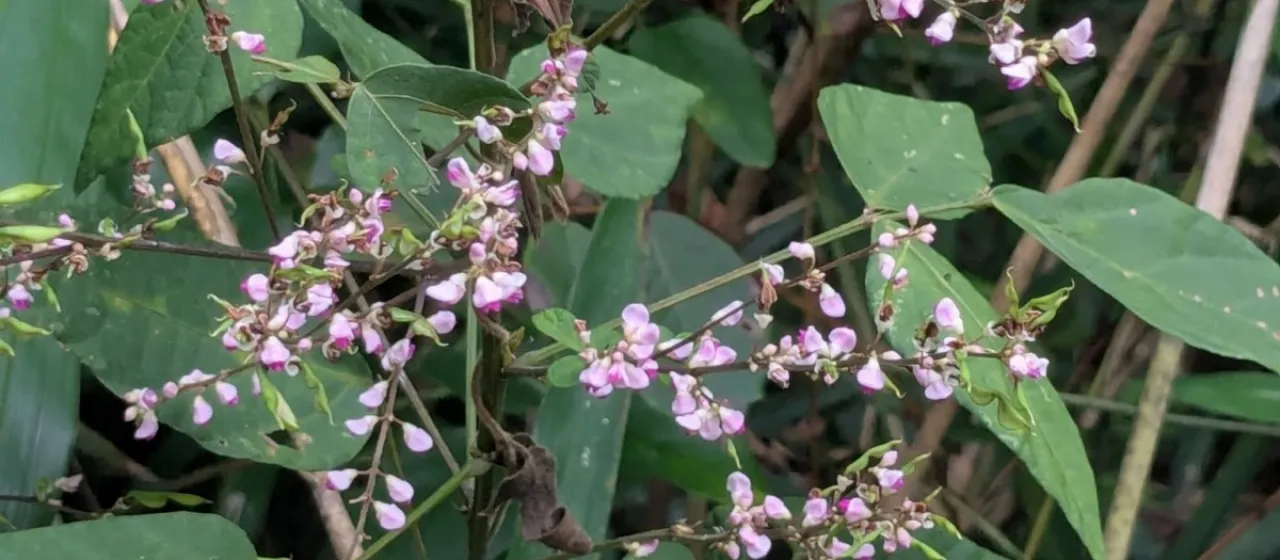
Description
Hylodesmum podocarpum is a perennial herbaceous plant belonging to the Fabaceae (legume) family. Often identified in older literature as a species of the genus Desmodium, it is currently recognized under the Hylodesmum genus, which represents a specialized group of nitrogen-fixing plants with significant ecological and potential agricultural value.
Originating from East Asia, including regions in China, Japan, and the Korean Peninsula, this plant is well-adapted to temperate and subtropical climates. It thrives naturally in forest margins and mountainous meadows, showing a preference for environments with moderate rainfall and partial shade during the peak growth season.
Botanically, it is distinguished by its trifoliate leaves and distinctive jointed pods, which are covered in hooked hairs. These structures allow the plant to disperse seeds effectively. The root system is robust, providing stability and contributing to soil aeration, while the foliage provides a dense canopy that can effectively suppress weed germination.
Agricultural requirements focus on providing well-drained, nutrient-rich soil. While the plant is relatively hardy, it performs best in soils with a slightly acidic to neutral pH. Proper spacing is crucial to prevent the spread of fungal diseases, such as leaf spot, which can occur in high-humidity conditions with insufficient airflow between plants.
The primary agricultural applications include forage production and soil quality improvement via nitrogen fixation. It acts as an excellent cover crop, protecting the soil from erosion and increasing its fertility. Farmers should be aware of potential pests such as leaf beetles and weevils, which may require monitoring and integrated pest management strategies to maintain high yields and plant health.