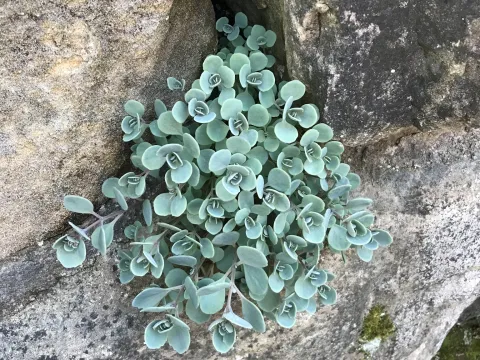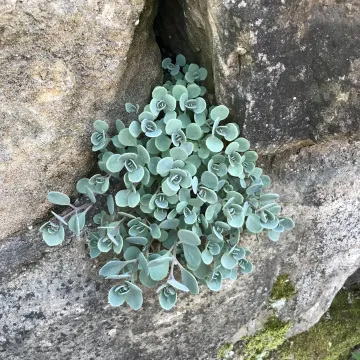
Cliff stonecrop
Hylotelephium cauticola x Sedum tetractinum
Description
Cliff stonecrop is a hybrid plant belonging to the Crassulaceae family. It is a perennial succulent that integrates the robustness of Hylotelephium species with the compact, spreading habit of various Sedum varieties. This cultivar is highly valued in horticulture for its fleshy, ornamental foliage and its ability to thrive in challenging environments where typical garden plants struggle to survive.
Originating from the mountainous regions of East Asia, this plant is well-adapted to rocky crevices and exposed slopes. In cultivation, it has become a staple for temperate climate gardens, provided that the site mimics its native habitat. The plant requires significant sunlight to maintain its compact growth form and to prevent the stems from becoming etiolated or weak.
Botanically, the plant is characterized by succulent leaves that may exhibit glaucous or purple tones depending on sun exposure. Its growth habit is typically mat-forming, with stems that can be decumbent or ascending. The root system is relatively shallow and efficient at gathering moisture from sparse soils, making it an excellent candidate for xeriscaping.
Agricultural requirements focus on soil drainage and moisture control. It thrives in lean, well-draining soils with a high mineral content, such as grit or coarse sand. Over-fertilization should be strictly avoided as it leads to rapid, soft growth that is more susceptible to pests and diseases. During the dormant season, the plant requires very little water to survive, as moisture accumulation is its primary enemy.
The main uses of this crop are decorative, primarily in rock gardens, green roofs, and dry border plantings. Typical health issues include root rot caused by poor soil aeration and attacks by aphids or mealybugs in overly humid conditions. Prevention involves maintaining excellent airflow around the foliage and ensuring that the planting site is elevated or slanted to prevent standing water.
Photo gallery