
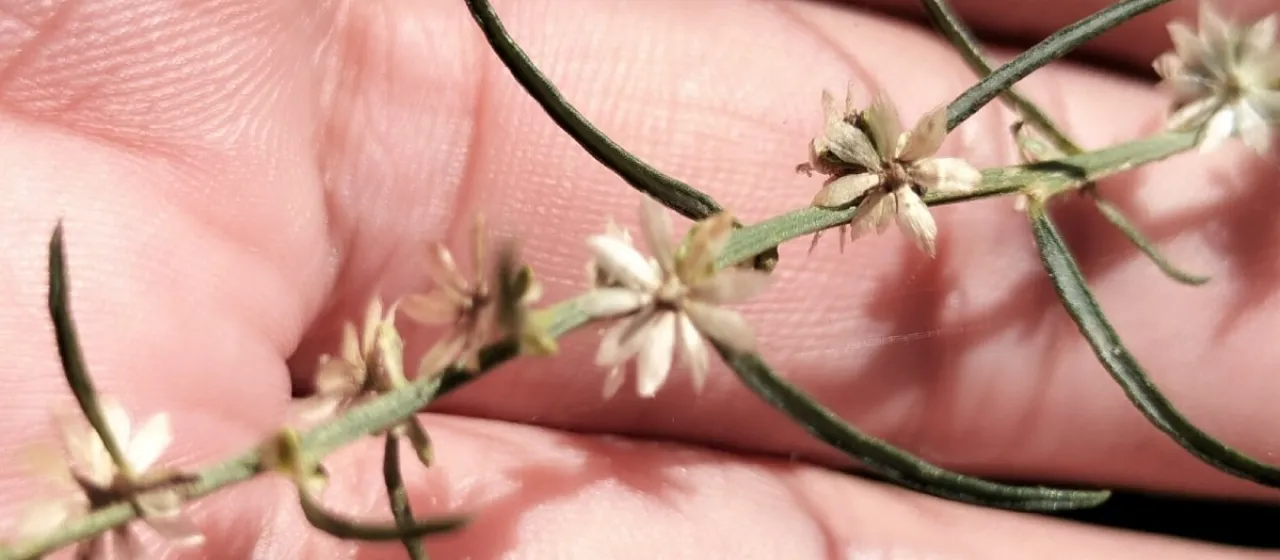
Description
Hymenoclea monogyra, commonly known as burrobrush, is a perennial shrub belonging to the Asteraceae family. It is a resilient plant species recognized for its ability to thrive in harsh, desert environments where water scarcity is the primary limiting factor for plant growth.
The plant is native to the southwestern United States and Mexico, particularly common in the Sonoran and Mojave Deserts. It is frequently found in dry washes, floodplains, and gravelly arroyos, where it utilizes its deep root system to tap into subterranean moisture reserves unavailable to smaller desert flora.
Botanically, this shrub is characterized by its slender, broom-like branches and tiny, thread-like leaves. Its reproductive strategy involves the production of small, wind-pollinated flowers, which can be prolific, leading to widespread seed dispersal across disturbed soil surfaces.
The environmental requirements for this species are centered on high light intensity and perfect soil drainage. It is highly intolerant of waterlogged conditions and prefers alkaline, sandy, or volcanic substrates. Agricultural management often focuses on suppressing its growth in grazing areas, as it can outcompete desirable vegetation.
Host-plant utility is primarily limited to soil stabilization and desert restoration projects. However, it is widely recognized as a major source of allergenic pollen, making it a nuisance in suburban desert development. Typical pests include various desert insects and nematodes, though it remains a hardy and dominant vegetation type.
- Scientific Name: Hymenoclea monogyra
- Common Name: Burrobrush
- Family: Asteraceae
- Adaptation: Extreme drought tolerance