
Description
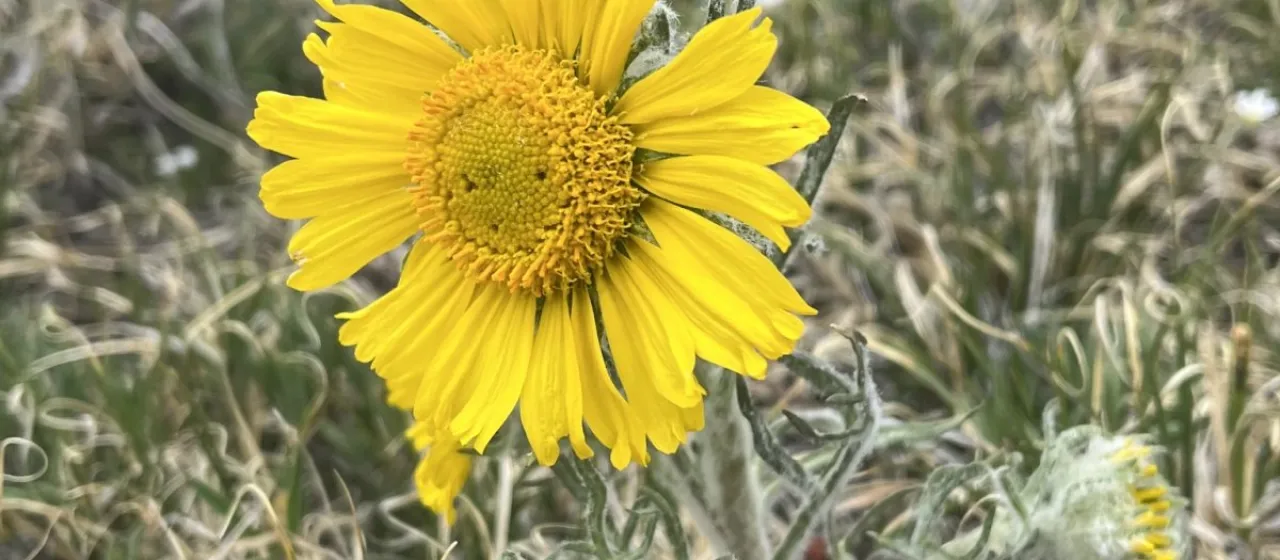
Hymenoxys grandiflora, commonly known as the Old Man of the Mountain, is a hardy perennial belonging to the Asteraceae family. As an agricultural and ornamental subject, it is highly regarded for its resilience in high-altitude environments and its striking, large sunflower-like yellow blooms that define alpine meadows.
The species is native to the high-elevation regions of the Rocky Mountains in North America. It is specifically adapted to cold, harsh climates where the growing season is significantly restricted. Its natural habitat consists of scree slopes, alpine ridges, and rocky tundra, which dictates its specific cultivation requirements in garden settings.
Botanically, this plant is characterized by a dense tuft of woolly, finely divided leaves, which serves as a protective mechanism against extreme weather. The flowers, which are notably large relative to the plant's overall size, stand on short, sturdy stems. The root system is deep and fleshy, designed to stabilize the plant in shifting rocky substrate and access deep moisture reserves.
Cultivation requires replicating these high-altitude conditions to ensure survival. Key requirements include:
- Full exposure to sunlight throughout the day.
- Gritty, fast-draining soil with very low organic content.
- Strict avoidance of winter wetness around the root crown.
The primary challenges in maintaining this species involve root rot, which occurs if drainage is insufficient or if the plant remains waterlogged during dormant periods. While it is generally resistant to most pests, aphids may occasionally be an issue during the flowering season. In professional landscaping, it serves as a premier specimen for alpine rock gardens and xeriscaping projects.