
Description
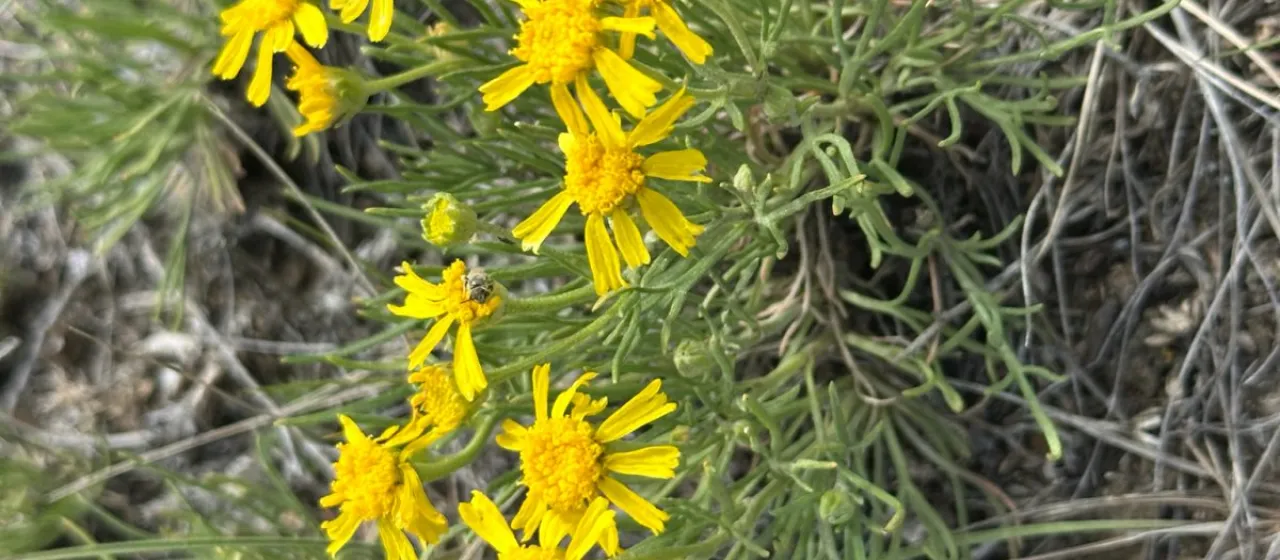
Richardson's bitterweed (Hymenoxys richardsonii) is a perennial herbaceous plant belonging to the Asteraceae family. In an agricultural context, it is widely recognized as a problematic toxic weed rather than a cultivated crop, posing significant challenges to rangeland management and livestock health in its native habitats.
Originating from the arid and semi-arid regions of North America, this species is commonly found across the western United States and parts of Canada. It thrives in open, disturbed sites, often spreading rapidly in overgrazed pastures where competition from native grasses has been reduced, thereby establishing its dominance in degraded landscapes.
Botanically, the plant is characterized by a sturdy taproot system, basal leaf rosettes, and conspicuous bright yellow flowers. Its structural adaptations, such as narrow, glandular-dotted leaves, allow it to minimize water loss and endure the harsh, arid conditions typical of its high-plains environment.
The plant demonstrates significant environmental resilience, showing high tolerance to poor soil quality, drought, and extreme seasonal temperature fluctuations. Management strategies focus on chemical intervention and pasture rotation. It does not require specific agricultural techniques for cultivation; rather, efforts are strictly directed toward its total eradication or suppression within grazing areas to ensure livestock safety.
The primary agricultural concern is the toxic nature of the plant, which contains compounds that are harmful to ruminants. Ingestion by livestock, particularly sheep, leads to chronic poisoning, often resulting in lethargy, digestive failure, and significant morbidity. Farmers are advised to conduct regular field inspections to prevent the plant's spread and protect their herds from accidental grazing.